Formulation
Bitter masking, sweeteners and cooling: a practical sensory development guide
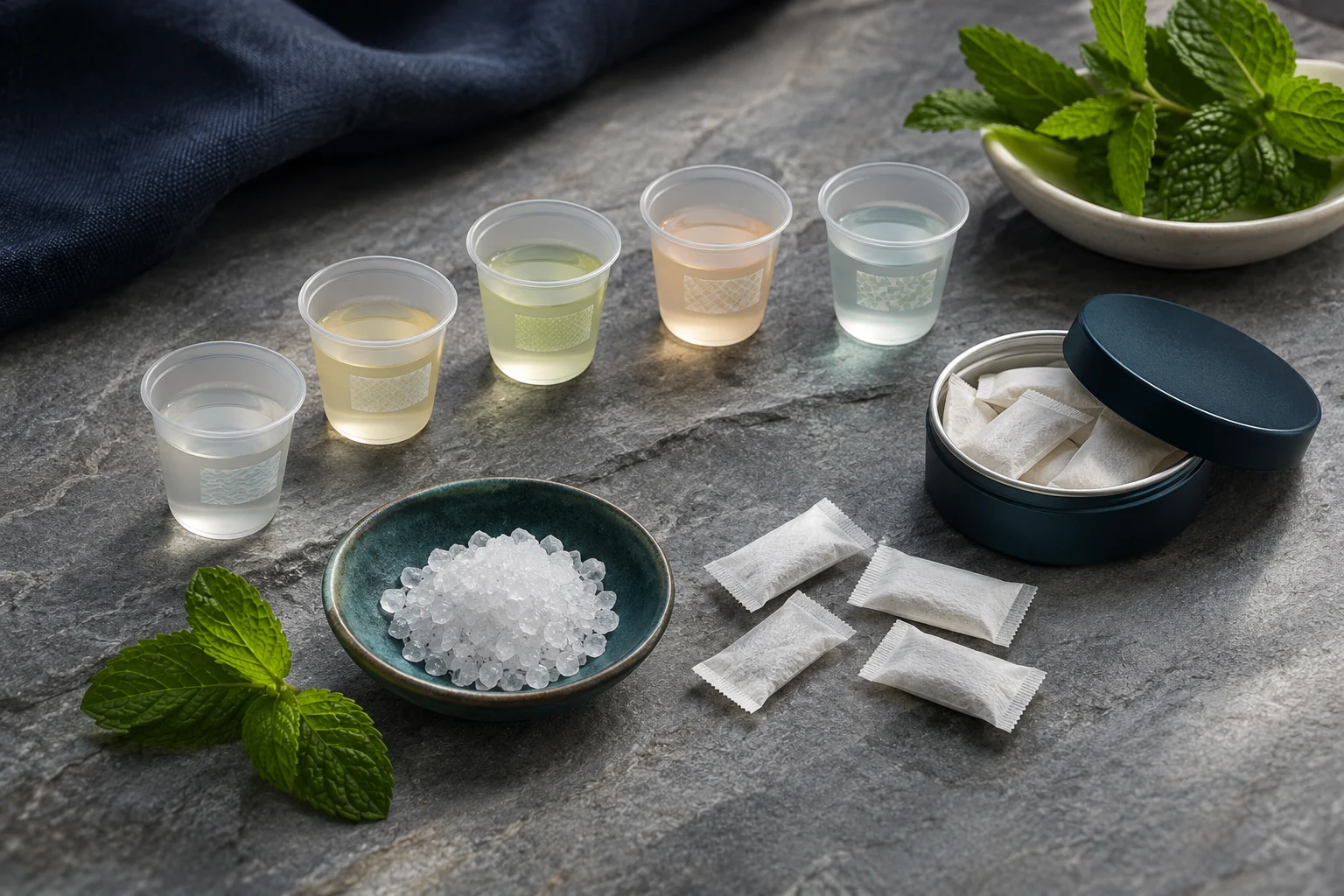
Editorial product illustration.
A prototype can have a strong flavor and still be unpleasant. Bitterness, sweetness, cooling, aroma and aftertaste are separate parts of the sensory system. Recording them separately gives a development team a clearer route than repeatedly asking for “more flavor.”
Identify the dominant problem
Describe whether the concern is an early bitter note, a persistent aftertaste, excessive cooling, weak aroma or rough particle feel. Ask when it appears and how consistently it is noticed. Samples should be coded and evaluated using an agreed procedure so that a new tin design or a known ingredient name does not dominate the comparison.
Evaluate the active blend at the intended commercial level. A flavor approved in a blank carrier may behave differently once caffeine or a botanical extract is added. Keep a control sample and avoid changing several variables at once when trying to diagnose a problem.
Balance sweetness and cooling deliberately
Sweetening can change the overall balance, while cooling can make the experience feel more intense. Neither property is a direct measurement of active delivery. Increasing one attribute may expose another, such as a lingering sweet note or a cooling sensation that outlasts the desired flavor.
Specify the ingredient forms and the full preparation composition, including carriers. Confirm their suitability for the proposed product and destination market. A material used in an ordinary food is not automatically cleared for every oral-contact exposure or claim.
Measure performance through storage
Volatile aroma, active ingredients, carriers and packaging can interact over time. Compare the approved prototype with stored samples in the final can or sachet. Separate a reduction in aroma from a change in bitterness or texture; describing all three as “flavor loss” can hide the cause.
Where a method is used to compare extraction or release, keep the conditions consistent and recognize its limits. A laboratory result does not establish the timing or intensity of a consumer’s perceived effect. Evidence must match the claim actually made. [1]
Use a sensory record that can guide production
- Attribute definitions with an agreed evaluation scale.
- Reference samples and coded prototype identities.
- Active strength, carrier grade and moisture system for each version.
- Storage conditions and sample age at evaluation.
- Acceptable variability and the approved commercial reference sample.
For controlled manufacturing, lock the approved flavor preparation and relevant supplier revision. A replacement described as the same flavor name can have a different carrier or concentration. Where supplement CGMP applies, component specifications and production controls help make that approval usable at manufacturing scale. [2]
Questions buyers ask
Why does a pouch burn even though the caffeine amount is modest?
A sensation cannot be assigned to one ingredient from the label amount alone. Review the full formulation, pouch construction and complaint details. Discomfort should be investigated rather than treated as proof of activity.
Can more sweetener completely remove bitterness?
Not always. The active, carrier, flavor, exposure pattern and aftertaste all matter. Compare controlled prototypes and assess the whole profile.
Why does the same mint name taste different in a new batch?
Check the actual flavor preparation, supplier revision, concentration, carrier, process and sample age. A shared flavor name does not guarantee the same material or finished sensory result.
Explore the product specifications
Sources & further reading
Sources checked November 7, 2026. External research and guidance are context; they are not test results or authorizations for a Sunova finished product.
Prepared by Sunova Pouches Editorial for B2B product development. Content is reviewed for sourcing and claim scope; it does not establish finished-product efficacy or market authorization.
Our editorial policy