
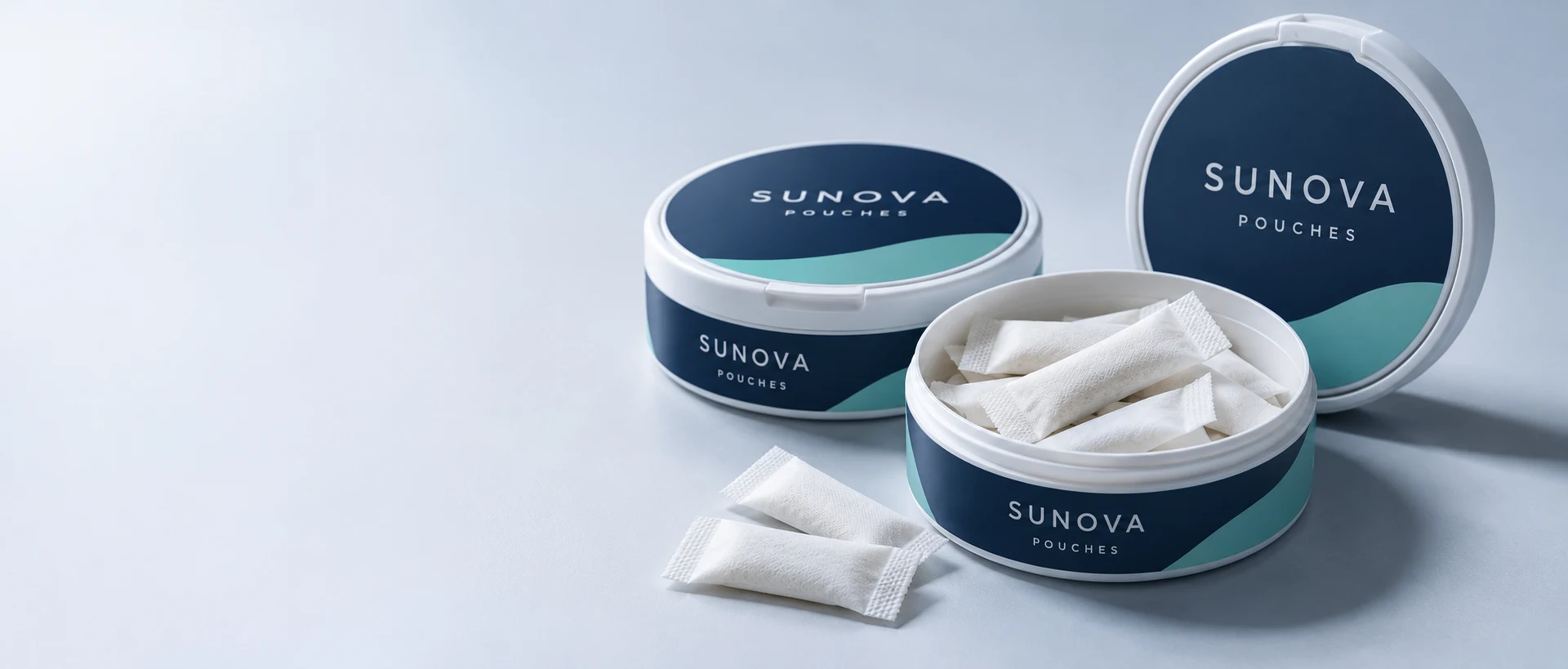





The base is part of the formula.
Carrier & fill structure
Microcrystalline cellulose, plant fiber including bamboo or cotton fiber, and maltitol are reference directions for the base system. Particle size, bulk density, water binding and flow affect blending and pouch filling.
Moisture & humectants
Glycerol and propylene glycol are humectant options to assess against the intended use and local requirements. Moisture content, water activity and sensory feel need defined measurement methods.
Sweetness
Sucralose, acesulfame-K, erythritol, steviol glycosides, xylitol and maltitol offer different formulation roles. Select the grade, inclusion, taste profile and labeling approach for the destination market.
Cooling & aroma
Mint flavors, menthol and cooling agents such as WS-23 are development options. Aroma strength and cooling intensity are separate parameters, evaluated with the actual active blend and pouch web.
pH adjustment
Sodium carbonate and sodium bicarbonate are reference pH-system ingredients. Define the preparation and measurement method; pH does not by itself validate absorption, release or local tolerability.
Oxidation & preservation
Antioxidant and preservative systems are selected only when justified for the formula and permitted use. Stability and microbiological evidence determine requirements; a fixed shelf life is not inherited from a generic base.
Actives with a clear identity.
Nutrients & specialist compounds
Caffeine, L-theanine, taurine, inositol, Alpha-GPC, L-tyrosine, phosphatidylserine, GABA, magnesium glycinate, vitamins A/C/D/E/K and B complex, calcium, zinc and selenium all require a specified form, grade, assay and intended amount.
Botanicals & complex materials
Green tea, green coffee, guarana, yerba mate, ginseng, elderberry, ashwagandha, chamomile, lemon balm, valerian, passionflower, Bacopa, Rhodiola, mushroom species, acai, kale, spirulina, algal omega-3, MCT and strain-defined probiotics require identity and handling details suited to the actual material.
Melatonin-containing concepts require a market-specific classification review. The presence of a familiar ingredient does not establish the status or benefit of the finished oral pouch.
Design from a mass balance.
The total ingredient mass must fit the target fill weight and leave a workable carrier, moisture and sealing system. Base percentage, ingredient ratios, encapsulation, release profile and shelf life are development variables. Claims about rapid absorption, extended release or superior bioavailability require appropriate finished-product evidence.
Pouches and films use different specifications.
A buccal pouch may be described as a dry oral pouch or wet oral pouch. An oral strip, oral dissolving strip, oral dissolving film, ODF film or mouth dissolving film is a separate dosage format. Film thickness, dimensions, disintegration and barrier packaging need their own development criteria.
The new reference products identify nicotine, caffeine, melatonin, Alpha-GPC, taurine and vitamins as the main ingredient directions. They do not establish a complete ingredient declaration for every project.