Caffeine, precisely scoped.
A caffeine pouch specification starts with total caffeine, not the weight of the botanical extract. A green tea or guarana ingredient can add caffeine even when anhydrous caffeine is already listed. Raw-material assay and batch-to-batch variation belong in the calculation.
Reference product specification
Commercial product
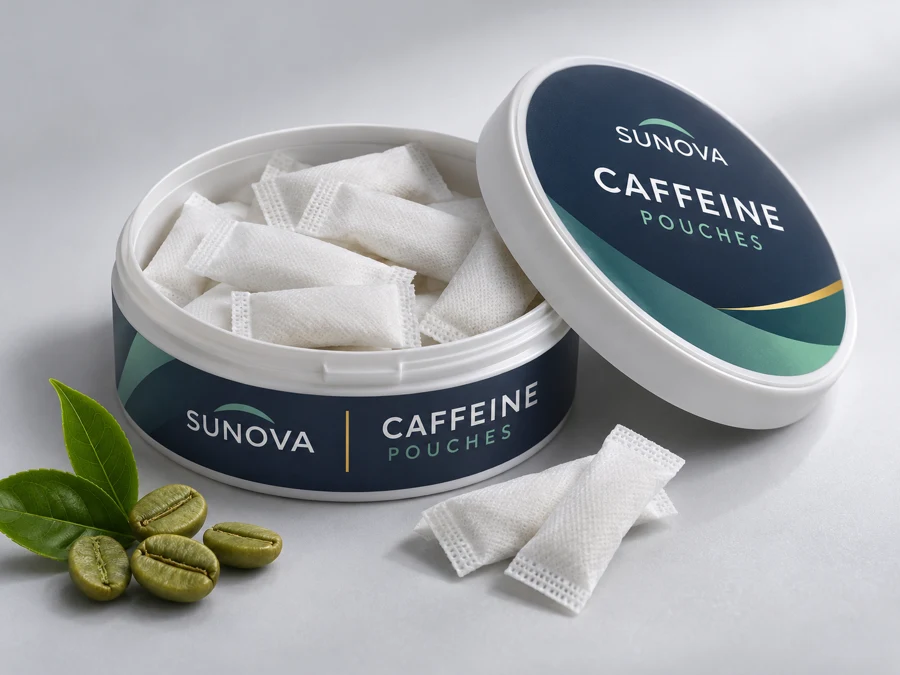
Caffeine Pouch
- Technology / format
- WET / DRY
- Reference strength
- 25–100 mg reference range
- Main ingredient(s)
- Caffeine
- Customization
- Custom strength according to customer requirements, subject to feasibility and market review.
- Pack configuration
- Project-specific
- Reference MOQ
- Confirm for the selected project
Reference specifications for project scoping. Confirm the mg basis, finished-unit assay, packaging revision and destination-market suitability in the approved product specification. These strengths are not consumer dosing directions.
Private label caffeine pouch development
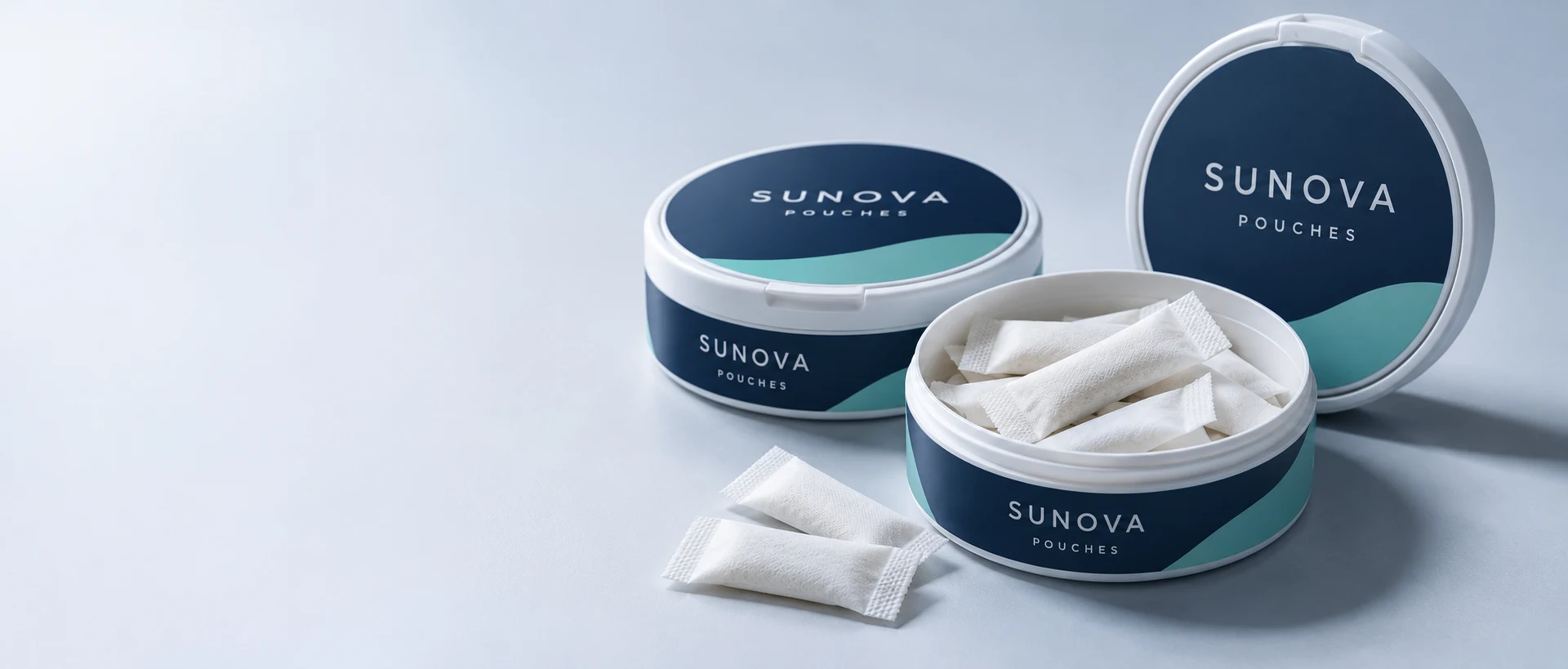
Dry caffeine pouch and wet caffeine pouch programs use the 25–100 mg reference range, with custom requirements reviewed separately. Nicotine-free caffeine pouch, energy oral pouches and wholesale caffeine pouches briefs should state the analytical and labeling requirements. A caffeine pouch 25–100mg private label project needs a defined strength basis, pack format and target market.
Buyers sometimes use the term caffeine snus. Confirm that the brief describes a caffeine oral pouch rather than a tobacco-containing snus product.
Our caffeine pouches OEM and private label development work starts with your target market, ingredient specification and sensory brief. ODM, CDMO and defined CRO assignments are available for this product family.
Caffeine from every source must be counted together. Set a target in mg per pouch and validate the finished blend by a suitable analytical method.