Formulation
From 91 common flavors to 5,100+ custom options: how to brief a flavor project
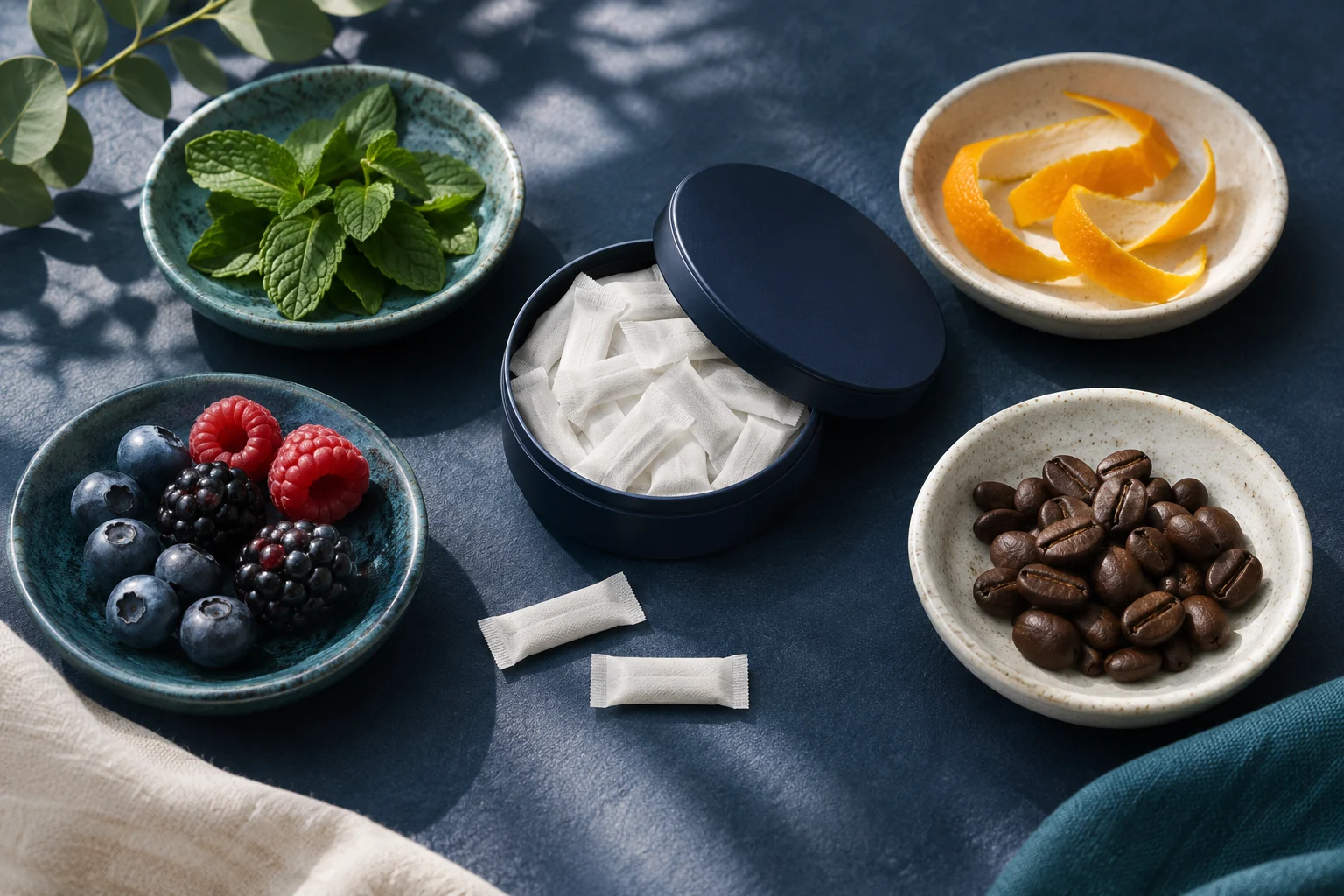
Editorial product illustration.
Sunova’s online library shows 91 commonly produced flavor directions, while the broader development range supports 5,100+ custom flavor options. These figures describe different levels of selection: a useful starting library and a wider development capability. A productive brief explains what should change from the starting point.
Describe the flavor in attributes
Give the desired aroma character, sweetness, cooling intensity, acidity or other relevant taste, and aftertaste. For example, “soft spearmint with low cooling and a short sweet finish” is more actionable than “premium mint.” Identify which attributes are essential and which can move during development.
If a commercial product is supplied as a sensory reference, explain which aspects are being compared. Use it to discuss a direction, not as permission to copy another brand’s identity, proprietary formula or claims. Keep the resulting product’s artwork and specifications original.
Match the flavor to the active and format
A flavor that works in a caffeine pouch may need different balancing in a botanical pouch or thin film. The active blend, carrier, moisture system and exposure pattern all influence the result. Define those variables before expecting the flavor house or manufacturing team to produce a commercial match.
For an oral film, the preparation must also fit the casting and drying process. For a pouch, assess the nonwoven, seal cleanliness and particle feel. A flavor oil or carrier can affect process behavior even when the sensory direction sounds familiar.
Approve a controlled sample sequence
Use a small set of coded samples and record changes in a version table. Compare against a retained reference and use consistent sample age and storage. Change one major variable at a time when diagnosing an issue, then evaluate the final combination as a complete product.
- Starting direction from the common library.
- Specific attributes to retain, increase or reduce.
- Active formula, target strength, format and moisture system.
- Market, allergen, vegan or other composition constraints.
- Approved version, final package and storage evaluation.
Make the final approval usable in production
The approval record should identify the actual flavor preparation, supplier revision, usage specification and finished-product reference. A flavor name alone is too ambiguous. Include how the material is checked and which changes require buyer review.
Composition claims need their own documentation. FDA’s allergen information explains why ingredient and labeling details matter for affected consumers. [1] Do not infer allergen absence, alcohol content, natural status or sugar content from a fruit or mint picture in a flavor library.
Reassess aroma, taste and appearance after storage in the selected commercial pack. The release sample establishes a reference; the stability program tests whether that reference remains acceptable through the intended product life.
Questions buyers ask
Are only the 91 online flavors available?
No. They are the commonly produced directions displayed online. Sunova supports 5,100+ flavor options for custom development, subject to formula compatibility and project review.
Does a beverage-style flavor contain the named beverage?
Not necessarily. A flavor description identifies a sensory direction. Confirm the actual composition and claims from the approved ingredient and finished-product documents.
Can the same flavor be used unchanged in a pouch and a film?
It needs evaluation in each format. Processing, carriers, moisture and the active blend can change both sensory performance and physical compatibility.
Explore the product specifications
Sources & further reading
Sources checked November 7, 2026. External research and guidance are context; they are not test results or authorizations for a Sunova finished product.
Prepared by Sunova Pouches Editorial for B2B product development. Content is reviewed for sourcing and claim scope; it does not establish finished-product efficacy or market authorization.
Our editorial policy