Product development
Nicotine-free, tobacco-free and caffeine-free: three separate specifications

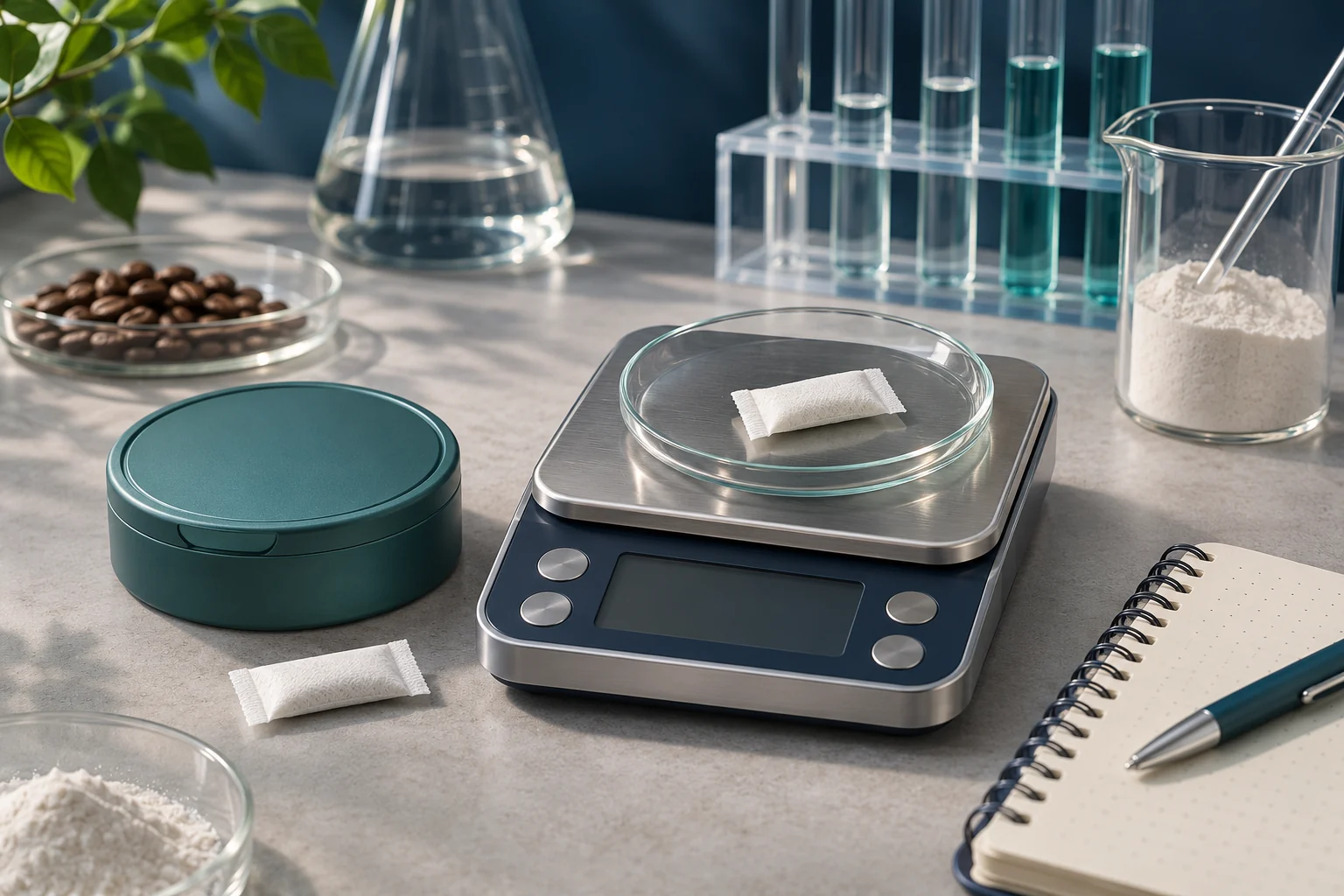
Editorial product illustration.
A pouch can be tobacco-free and still contain nicotine. It can be nicotine-free and still contain caffeine. A buyer needs three separate answers before approving the formula, label or production route. Treating these terms as synonyms creates avoidable errors in purchasing and customer communication.
Separate the ingredient statements
“Tobacco-free” describes the absence of tobacco material in the stated context; it does not, by itself, describe the nicotine source or nicotine content. “Nicotine-free” needs an agreed specification for nicotine and a suitable verification method. “Caffeine-free” must account for botanical ingredients as well as any deliberately added caffeine.
Coffee, tea and guarana are particularly easy to overlook when a product brief says “no added caffeine.” That statement describes an addition step, while a caffeine-free claim describes the finished product. Ask the supplier to identify every ingredient that could contribute the substance being excluded.
Write a finished-product specification
A useful specification identifies the analyte, reporting unit, sampling point, analytical method and reporting limit. A result described as “not detected” is meaningful only with the method’s detection or quantification capability. It should not be casually rewritten as an unlimited promise of absolute zero.
- Identify whether the claim concerns nicotine, tobacco material, caffeine or all three.
- List active ingredients, botanical extracts, flavors and carriers with their full supplier specifications.
- Agree an analytical reporting limit that is appropriate for the intended statement.
- Review shared-equipment controls and the sequence of nicotine and non-nicotine production.
- Confirm the final label and product category for the destination market.
Check cross-contact and change control
A raw-material declaration does not describe everything that happens during manufacturing. Supplier approval should also address material identification, line clearance, cleaning verification, rework restrictions and batch traceability. For products regulated as US dietary supplements, the applicable CGMP framework includes specifications and manufacturing controls; classification must be established before applying that framework. [1]
Changes deserve the same attention as the first formula. Replacing a coffee flavor with a coffee extract, adding a botanical blend or moving production to another line can change the evidence behind a claim. Put those changes through a documented review before reusing existing artwork.
Keep the product category visible
A nicotine-free label does not establish that a pouch is a dietary supplement, a cessation aid or appropriate for every consumer. Intended use, route, ingredients and claims matter. US dietary supplements are intended for ingestion; an oral-contact format or a claim of absorption through the gums needs a specific classification assessment. [2]
Similarly, an authorization for a particular nicotine product does not transfer to a lookalike nicotine-free product or another brand. FDA marketing decisions relate to identified products and applicants. [3] Sunova’s nicotine and functional pouch programs should therefore be reviewed as separate technical and market scopes.
Questions buyers ask
Can a caffeine pouch contain nicotine?
The product name alone is insufficient. Request the full formula declaration and the finished-product nicotine specification. A clear label should distinguish caffeine content from nicotine content.
Does “no added caffeine” mean caffeine-free?
No. Naturally caffeinated inputs can still contribute caffeine. Define whether the request excludes added caffeine or limits total caffeine in the finished pouch, then verify the appropriate claim.
Can a nicotine-free pouch be promoted as a quitting treatment?
A nicotine-free composition does not establish a treatment indication. Cessation claims require an appropriate regulatory and evidence route for the actual product.
Explore the product specifications
Sources & further reading
- FDA: Dietary Supplement CGMP Small Entity Compliance Guide
- FDA: Questions and Answers on Dietary Supplements
- FDA: Tobacco Products Marketing Orders
Sources checked November 7, 2026. External research and guidance are context; they are not test results or authorizations for a Sunova finished product.
Prepared by Sunova Pouches Editorial for B2B product development. Content is reviewed for sourcing and claim scope; it does not establish finished-product efficacy or market authorization.
Our editorial policy