Oral films
Disintegration, dissolution and absorption: what an oral film test can show

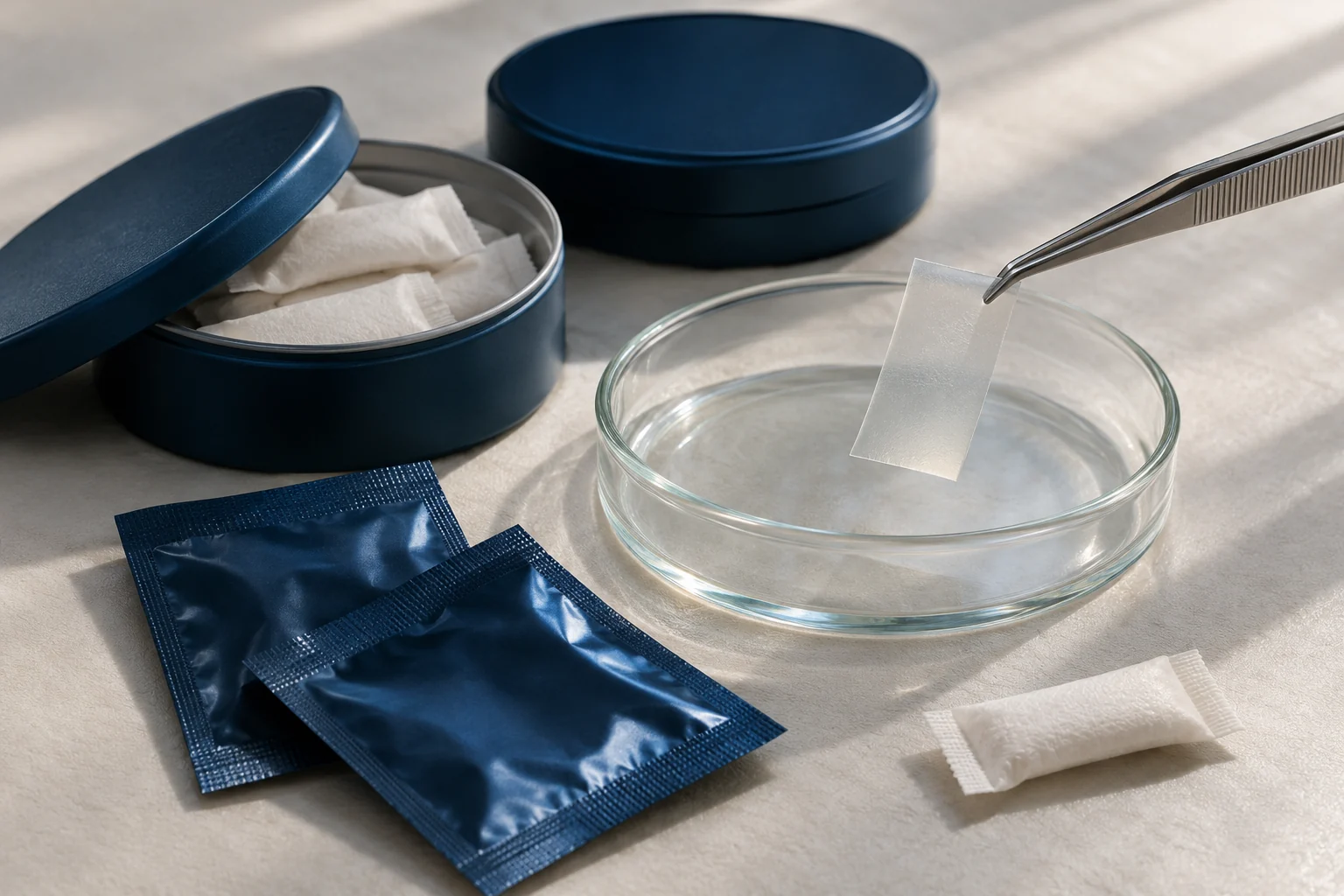
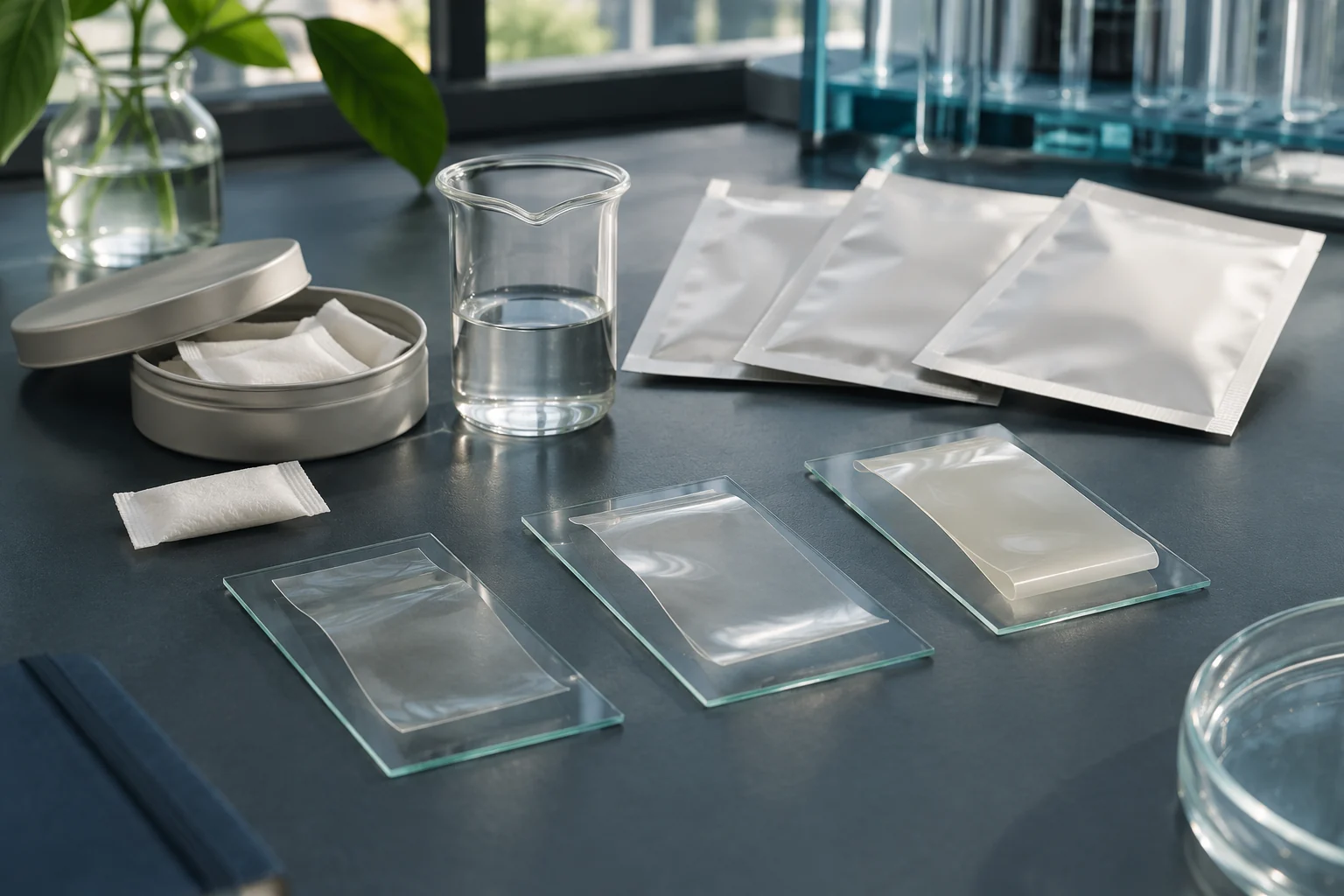
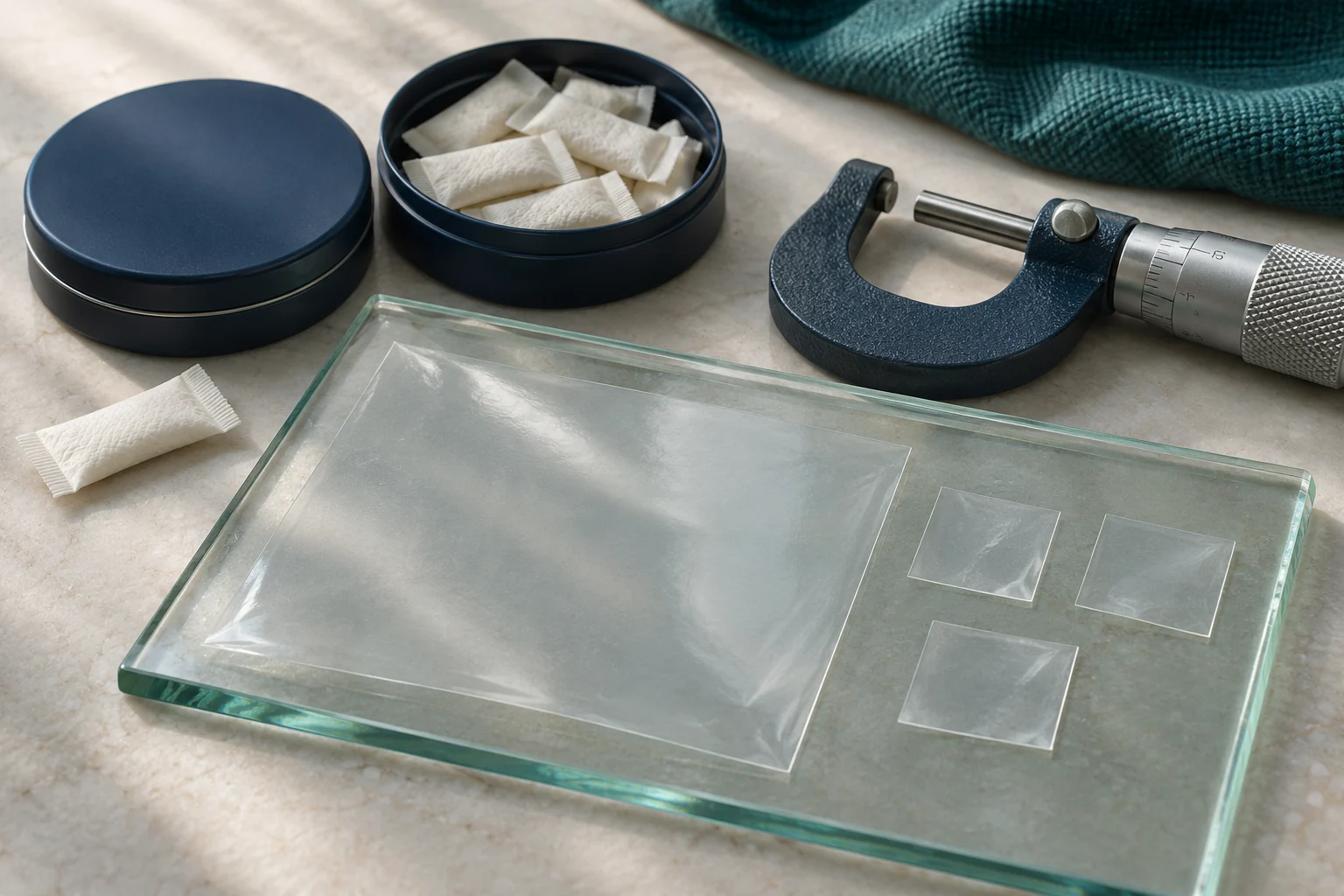
Editorial product illustration.
“Dissolves quickly” can describe what someone sees in a demonstration. It does not establish how much active is released, where the active is absorbed, or when a clinical effect begins. A professional oral-film specification separates those questions.
Define the physical endpoint
Disintegration concerns the breakup of the film under defined conditions. The endpoint may be loss of an intact structure or another method-specific observation. State the medium, volume, temperature, agitation, support and endpoint rule.
A video in a glass of water is useful for illustrating behavior only when its conditions are described. It should not be represented as a standardized test unless the approved method actually matches the demonstration.
Measure release with an appropriate method
Dissolution or release testing measures active entering a defined medium over time. It requires analytical sampling and a suitable method. A film can lose its visible shape while undissolved material or active remains.
Formulation research on oral films examines these physical and chemical attributes under specified experimental conditions. [1] Results belong to those formulations and methods. They cannot supply a universal release time for every ingredient or commercial strip.
Keep absorption and effect claims separate
Bioavailability concerns the active reaching the relevant circulation or site under the study’s definition. Evidence may require an appropriate human study. The route and extent of absorption cannot be inferred from a thin format or a rapid disintegration result.
For a sleep-positioned product, sleep onset, duration and next-day effects are different outcomes. NCCIH’s melatonin information discusses evidence and uncertainties for that ingredient; it does not validate a new oral-strip formulation. [2] Health claims should be reviewed against the actual evidence and applicable category. [3]
Write an accurate technical brief
- Describe the strip’s physical behavior using a defined method.
- Report active release only when it has been measured appropriately.
- Identify any proposed absorption or outcome claim separately.
- Match the evidence to the finished formula, route and intended users.
- Review whether the intended use changes regulatory classification.
This separation gives development teams an actionable plan. A physical quality target may be achievable early, while a clinical claim requires a different evidence program. Neither should be silently substituted for the other.
Questions buyers ask
Does faster disintegration mean a faster effect?
No. It is a physical test result. An onset claim needs evidence relevant to the ingredient, finished product, use conditions and outcome.
Does an oral strip automatically bypass digestion?
No. Some material may be swallowed, and the absorption route must be established rather than assumed from the dosage format.
Can a supplier quote one dissolving time for every strip?
A meaningful time needs a specified formulation, test method and endpoint. Different film systems should be assessed on their own data.
Explore the product specifications
Sources & further reading
- Original study: Compatibility Assessment of a Novel Orodispersible Film Vehicle with Selected Active Ingredients
- NCCIH: Melatonin — What You Need To Know
- FTC: Health Products Compliance Guidance
Sources checked November 7, 2026. External research and guidance are context; they are not test results or authorizations for a Sunova finished product.
Prepared by Sunova Pouches Editorial for B2B product development. Content is reviewed for sourcing and claim scope; it does not establish finished-product efficacy or market authorization.
Our editorial policy