Quality & stability
Water activity and moisture content: why pouch manufacturers measure both

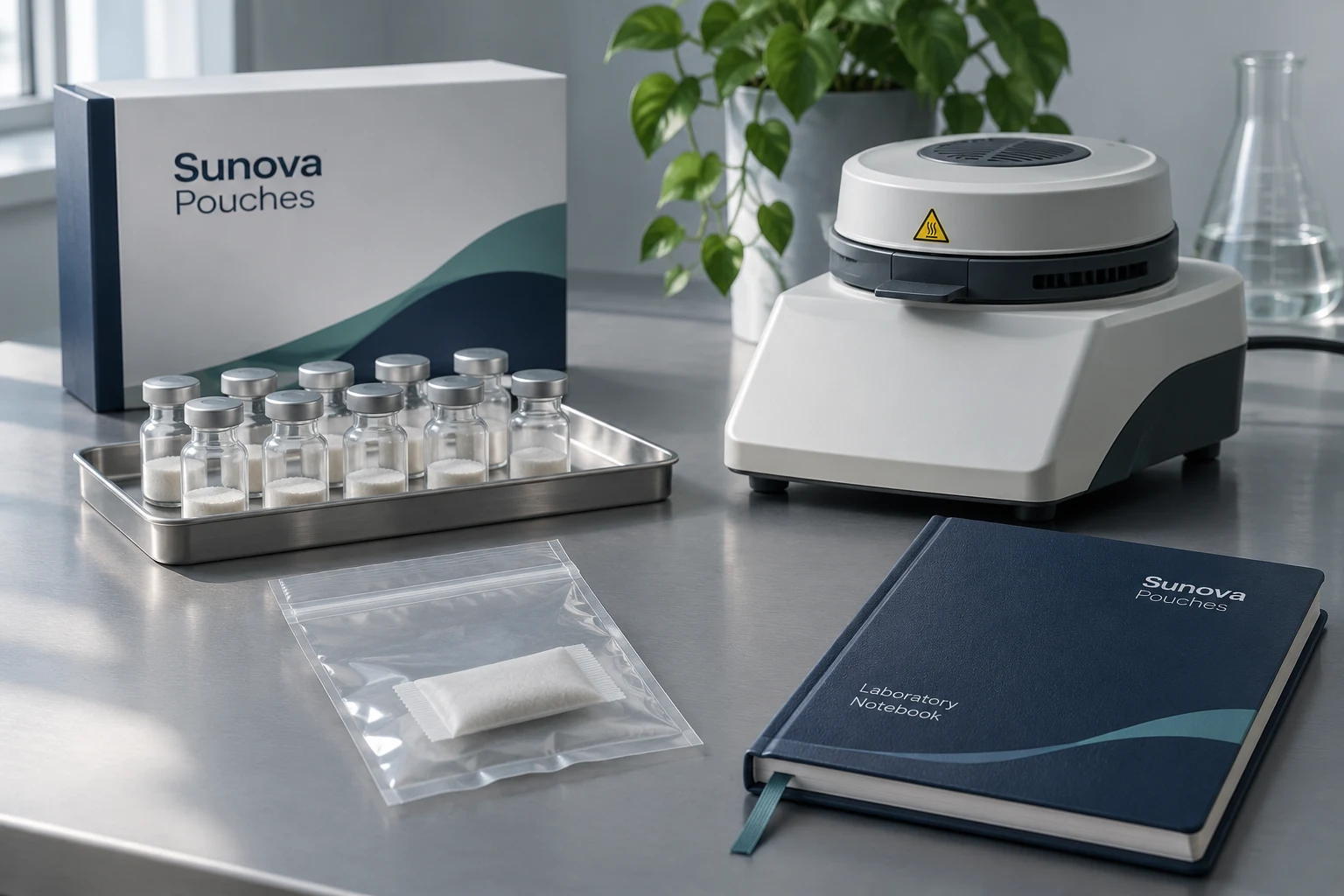
Editorial product illustration.
Two batches can contain the same percentage of water and behave differently in storage. Moisture content describes how much water a method finds in the sample. Water activity describes the availability of water in the system at the measurement temperature. Both can be useful, but they answer different questions.
Write two specifications with two methods
A moisture result depends on the analytical method. Loss on drying can include volatile compounds as well as water; a water-specific method may give a different result. Specify the sample preparation, equipment, conditions and reporting basis. Changing the method can create an apparent batch difference without a real formulation change.
Water activity is an equilibrium measurement, usually expressed on a scale from zero to one. Temperature and equilibration matter. FDA’s technical guide explains the distinction between water activity and moisture content and why formulation affects their relationship. [1] It does not supply a universal finished-pouch specification.
Connect the numbers to the formulation
Humectants, salts, soluble solids and the carrier system influence how water behaves. Compare prototypes using the same method and temperature, then examine the consequences for mouthfeel, powder flow, seal contamination, flavor and microbiological control. A lower number is not automatically the preferred sensory result.
Measure the complete finished product at defined points. A loose blend, newly filled pouch and stored can may not have reached the same equilibrium. If the project compares a dry and a moist format, keep those sampling differences visible in the report.
Use a practical control plan
- Identify the method and calibration or verification checks for each measurement.
- Define sampling locations and the time between production, packing and testing.
- Record sample temperature, equilibration criteria and handling exposure.
- Link acceptance limits to development data and the product’s risk assessment.
- Trend results alongside microbial, sensory and package observations.
For a new formula, development data should establish which measurement predicts a relevant failure. A convenient value copied from another pouch may have little connection with the new ingredient and packaging system.
Include packaging and opened-pack behavior
A can’s barrier, closure fit and repeated opening affect moisture exchange. Evaluate the finished commercial configuration rather than an uncovered laboratory sample alone. Storage conditions should reflect the intended supply chain and label instructions, with justified excursions where relevant.
Water activity is one part of a control strategy. It does not replace microbial testing, hygiene controls, ingredient qualification or a justified shelf-life program. For dietary supplement operations within its scope, FDA’s cGMP guidance explains the role of specifications and quality controls. [2]
Questions buyers ask
Does a dry-feeling pouch always have low water activity?
No. Touch and perceived dryness are sensory observations. Water activity requires a controlled measurement of the actual formulation.
Can a low water activity result prove a pouch is sterile?
No. It does not establish sterility or show that contaminants were absent. Use a risk-based microbiological program and appropriate production controls.
Can one limit be used for every flavor?
Only with evidence that it is appropriate. Flavor ingredients and other formula changes can alter the water system, so a shared limit needs a documented rationale.
Explore the product specifications
Sources & further reading
Sources checked November 7, 2026. External research and guidance are context; they are not test results or authorizations for a Sunova finished product.
Prepared by Sunova Pouches Editorial for B2B product development. Content is reviewed for sourcing and claim scope; it does not establish finished-product efficacy or market authorization.
Our editorial policy