Quality & stability
Assay and content uniformity: proving what is in each pouch or strip

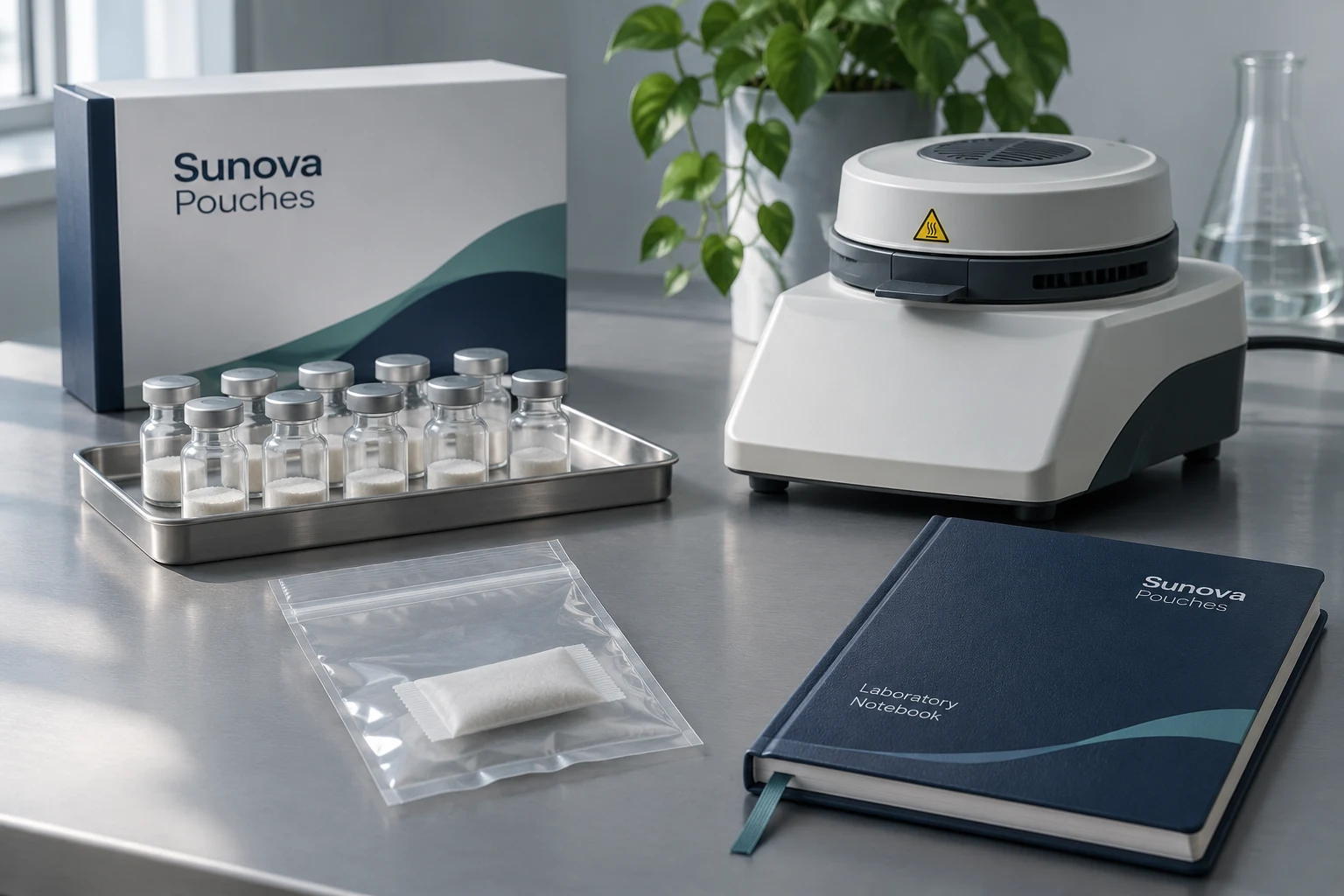
Editorial product illustration.
Average active content and consistency between individual units are different quality questions. A blended sample can show the expected average while concealing variation between pouches or strips. The sampling plan should reflect what the customer receives and what the label declares.
Start with the declared quantity
State the ingredient identity, chemical or reporting basis, unit of measure and serving definition. Milligrams of an extract are not automatically milligrams of its marker compound. A caffeine contribution from coffee or guarana should be accounted for when the product’s total caffeine is specified.
Distinguish input calculations from measured finished-product results. A formulation sheet shows what was intended to be added. An appropriate analytical result provides evidence about the sampled product. FDA’s cGMP guidance discusses specifications, testing and the use of scientifically valid methods for dietary supplements within its scope. [1]
Use a method suitable for the finished matrix
The laboratory must recover and measure the target in the presence of carriers, flavors, sweeteners, fibers or film-forming polymers. A raw-material method may require adaptation. Extraction efficiency, specificity, precision and the relevant concentration range deserve attention before routine release testing begins.
Keep the method identifier on the report. If the active degrades into related compounds, ask whether the method can distinguish the target from those compounds. A favorable total signal should not conceal a loss of the intended substance.
Sample across the process
- Define how many units are sampled and why the plan is appropriate.
- Cover relevant production positions, times or casting-sheet locations.
- Separate individual-unit testing from a pooled composite result.
- Record fill weight or film dimensions alongside assay where useful.
- Investigate trends and failures before disposition of the batch.
For pouches, powder segregation and fill variation may contribute to differences. For films, solution or suspension uniformity, casting conditions and cutting location may matter. Published film work demonstrates why formulation and manufacturing conditions must be studied together; it does not provide a release specification for every film. [2]
Carry the specification into shelf life
A release result describes the tested batch at the time sampled. Stability data are needed to justify what remains acceptable during the labeled storage period. Evaluate the finished commercial pack and relevant attributes beyond assay, including physical integrity and microbiological quality.
Any proposed formulation allowance for expected loss needs technical, safety and regulatory review. Adding more material without a justified plan can create excessive initial content or hide a poorly controlled process. Keep decisions and acceptance criteria in approved records.
Questions buyers ask
Does a passing average prove every pouch has the same content?
No. A composite average can conceal unit variation. Individual-unit evidence and a justified sampling plan address that question more directly.
Can equal film weight prove equal active content?
No. Equal weight is useful process information, but the active may be unevenly distributed. Confirm the relationship with appropriate analytical data.
Is an ingredient supplier’s COA enough for the finished product?
It supports qualification of that ingredient lot. It does not by itself establish the finished product’s active content, uniformity or stability.
Explore the product specifications
Sources & further reading
- FDA: Dietary Supplement CGMP Small Entity Compliance Guide
- Original study: A novel unit-dose approach for pharmaceutical compounding of an orodispersible film
Sources checked November 7, 2026. External research and guidance are context; they are not test results or authorizations for a Sunova finished product.
Prepared by Sunova Pouches Editorial for B2B product development. Content is reviewed for sourcing and claim scope; it does not establish finished-product efficacy or market authorization.
Our editorial policy