Quality & stability
Microbial, heavy-metal and contaminant testing: build a risk-based release panel
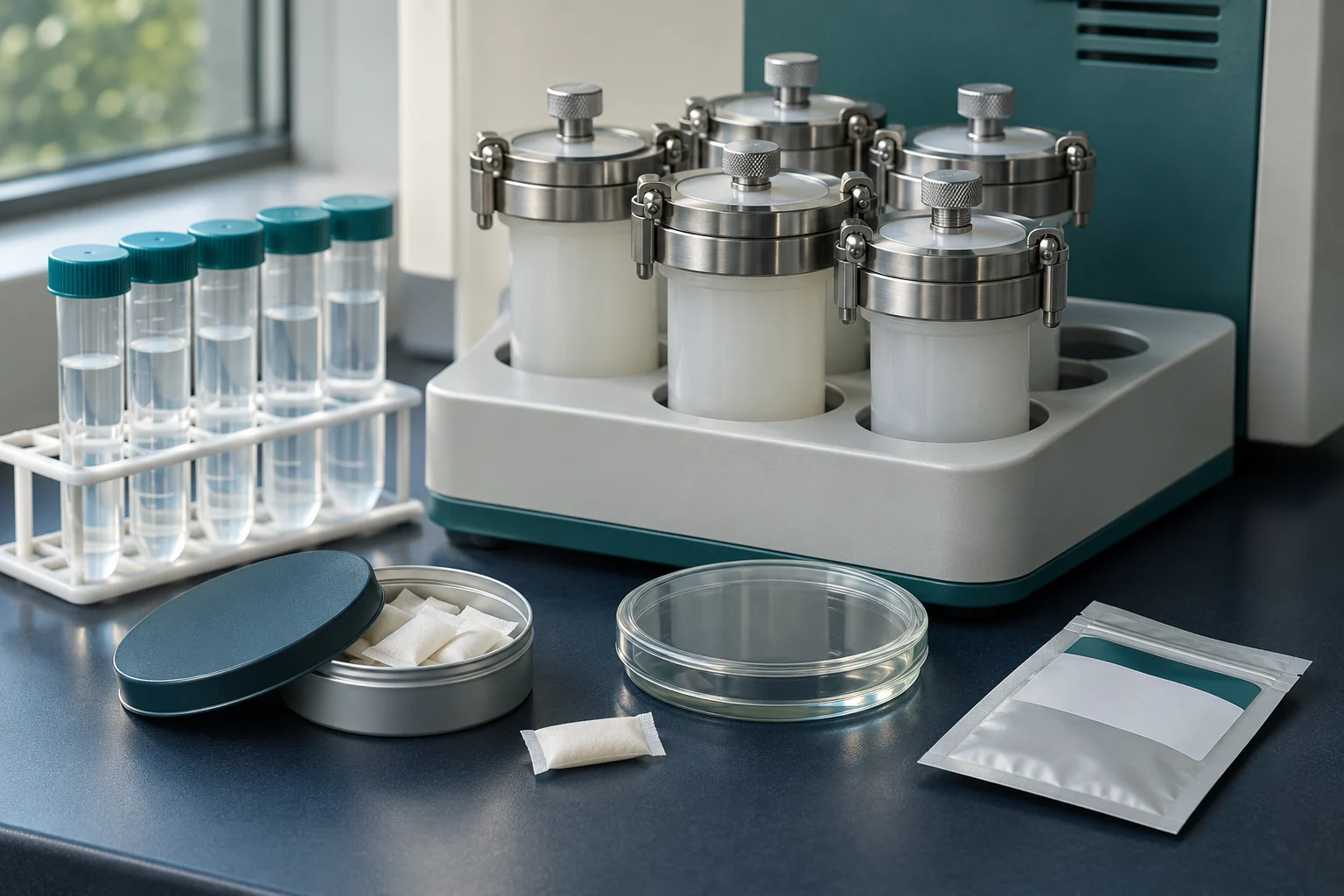
Editorial product illustration.
A useful release panel follows the formula, raw-material risks, manufacturing process and destination requirements. The longest test list is not automatically the best one. Buyers need to know what each result controls, which method was used and how the sampled material represents the finished batch.
Build the hazard review from the inputs
Botanicals, minerals, fermentation-derived ingredients, water and packaging can introduce different concerns. Review identity, origin, processing history, supplier performance and intended exposure. Determine which microorganisms, elemental contaminants, residues or other hazards need control for that particular product.
Use category and jurisdiction requirements to set the framework. FDA’s dietary supplement cGMP guidance explains specifications and quality controls for products within that category. It should not be presented as a universal approval of every oral pouch format. [1]
Specify microbiological methods and suitability
A result needs a method, sample quantity, reporting units and acceptance criteria. Antimicrobial ingredients or an unusual matrix may interfere with recovery, so method suitability matters. Distinguish tests for enumeration from tests for specified organisms; the results answer different questions.
FDA’s Bacteriological Analytical Manual is an official resource for laboratory methods. [2] The laboratory still needs to select and apply an appropriate method to the product. A generic “microbiology passed” statement is insufficient for a technical review.
Read elemental and residue results carefully
Check whether the report gives a measured concentration, a result below a stated detection or quantitation limit, or a simple pass statement. Relate the result to the relevant serving or exposure basis where required. “Not detected” is meaningful only with its method and reporting limit.
Define the relevant analytes rather than using an unexplained “heavy metals” heading. Other contaminants may require separate evaluation depending on the ingredient and risk assessment. A narrow panel cannot establish the absence of every possible contaminant.
Make the release decision traceable
- Match the report to the product, batch and sampling date.
- Identify the laboratory, method and reporting limits.
- Confirm the specification version and relevant destination requirements.
- Document investigation and disposition of atypical or failing results.
- Retain samples and records under an approved retention policy.
A COA should summarize the approved release evidence accurately. For a proposed supplier, request a suitably redacted example and discuss what will be reported for the commercial batch. Do not publish an illustrative report as if it were the result for a real customer lot.
Questions buyers ask
Does a clean microbial result prove the product is sterile?
No. Routine microbiological acceptance and sterility are different concepts. The claim must match the process and evidence.
Can a raw-material test replace all finished-product testing?
Not automatically. The control strategy must account for processing, other inputs and the finished matrix. The appropriate combination requires a documented rationale.
Should every formula use the same contaminant panel?
No universal panel fits every formula and market. Use the ingredient risk assessment and applicable requirements to justify the selected tests.
Explore the product specifications
Sources & further reading
Sources checked November 7, 2026. External research and guidance are context; they are not test results or authorizations for a Sunova finished product.
Prepared by Sunova Pouches Editorial for B2B product development. Content is reviewed for sourcing and claim scope; it does not establish finished-product efficacy or market authorization.
Our editorial policy