Quality & stability
Heat, flavor loss and leakage in transit: investigate the packed product
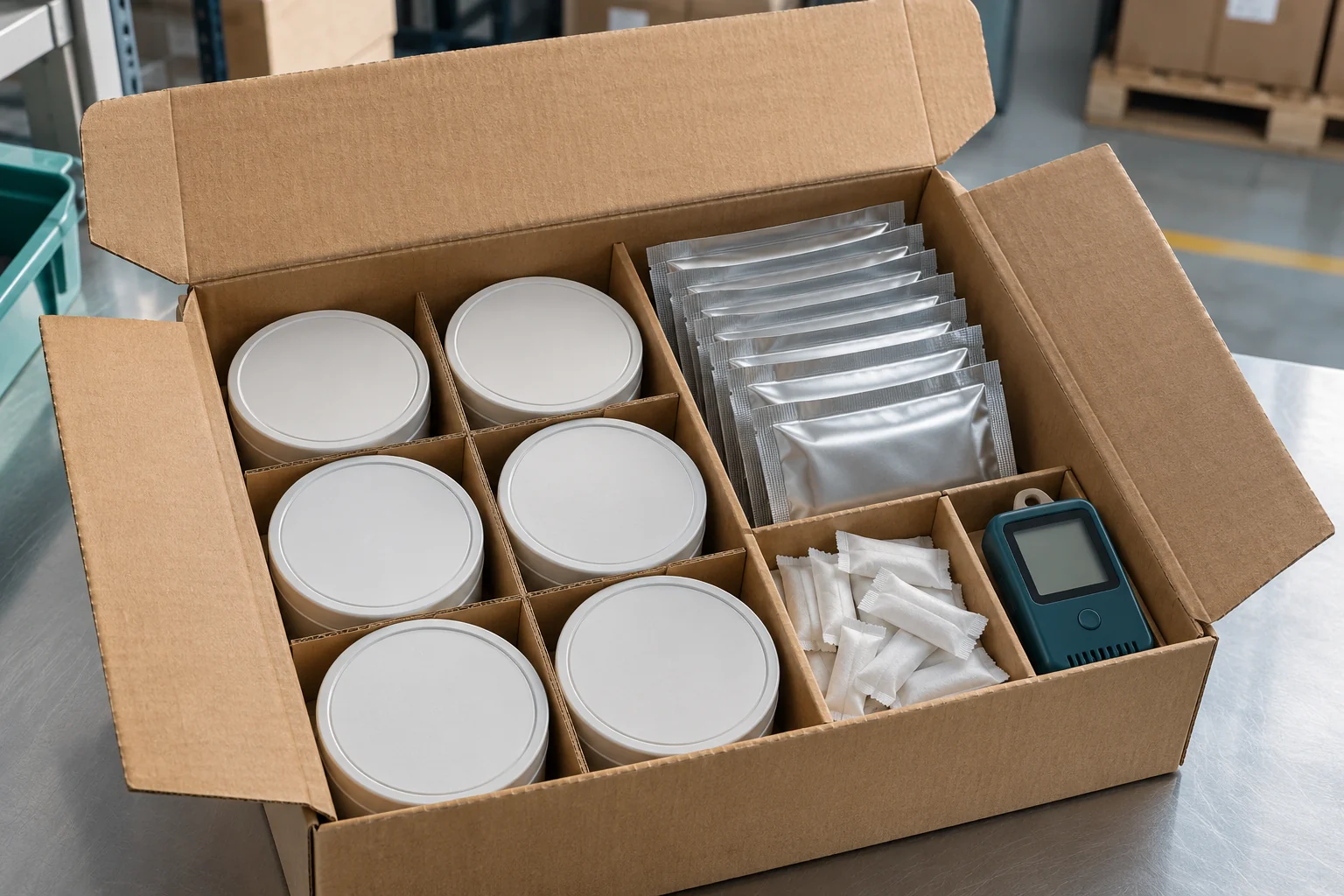
Editorial product illustration.
A warm shipment can arrive with acceptable cans but altered flavor, dry pouches or sticky films. Start the investigation with the packed system and its actual transport history. A photograph of the carton is useful evidence, but it rarely explains the complete failure.
Preserve the shipment evidence
Record batch numbers, packing date, dispatch and arrival dates, route, storage locations and the affected quantity. Retain unopened units where possible and photograph closures, seals, cartons and any leakage. Compare the complaint material with retained samples from the same batch.
Temperature or humidity logger data can help distinguish a documented excursion from a suspected one. Avoid reconstructing exact transit conditions from local weather alone. The temperature inside a vehicle or container can differ from ambient conditions.
Separate possible failure mechanisms
Flavor loss may involve volatility, oxidation, package interaction or moisture change. A leaking pouch may involve seam damage, overfill or liquid migration. A tacky film may involve water uptake, formulation or incomplete drying. Similar visible symptoms can have different causes.
Review the formula, process and package specifications before choosing a correction. Increasing flavor addition or changing a closure without evidence can introduce another quality problem and complicate the investigation.
Design a representative shipping study
- Use the finished product, commercial can or sachet and intended shipper.
- Define the relevant route conditions and justified excursion profile.
- Inspect before and after transport or simulation using the same criteria.
- Measure chemical, moisture and physical attributes linked to the observed risk.
- Include closure, pouch seal or sachet integrity checks where appropriate.
- Keep photographs, data and disposition decisions linked to the batch.
A transit trial can complement stability work. It does not replace a shelf-life study under labeled storage conditions. Repeated opening after arrival is another use scenario and should be assessed separately when relevant.
Turn findings into controlled changes
Potential corrections include a revised barrier, closure, process setting, packing method or distribution instruction. Select them from the root-cause evidence. Confirm that the change does not adversely affect assay, release behavior, sensory acceptance or regulatory labeling.
FDA’s dietary supplement cGMP guidance provides a reference for controlled quality operations, investigations and records within its category. [1] Responsibility for complaint handling and distribution decisions should also be defined in the manufacturing agreement.
Questions buyers ask
Is refrigeration always the solution?
No. The storage system must be justified for the formula and packaging. Condensation and handling changes may introduce new issues. Use the approved storage instructions.
Can an extra outer carton prevent flavor loss?
It may help with physical protection, but the relevant moisture, oxygen or volatile barrier usually requires evaluation of the product’s primary packaging.
Can a passed shipping trial establish shelf life?
No. It evaluates a defined transport scenario. A shelf-life claim needs appropriate stability evidence for the finished product and storage conditions.
Explore the product specifications
Sources & further reading
Sources checked November 7, 2026. External research and guidance are context; they are not test results or authorizations for a Sunova finished product.
Prepared by Sunova Pouches Editorial for B2B product development. Content is reviewed for sourcing and claim scope; it does not establish finished-product efficacy or market authorization.
Our editorial policy