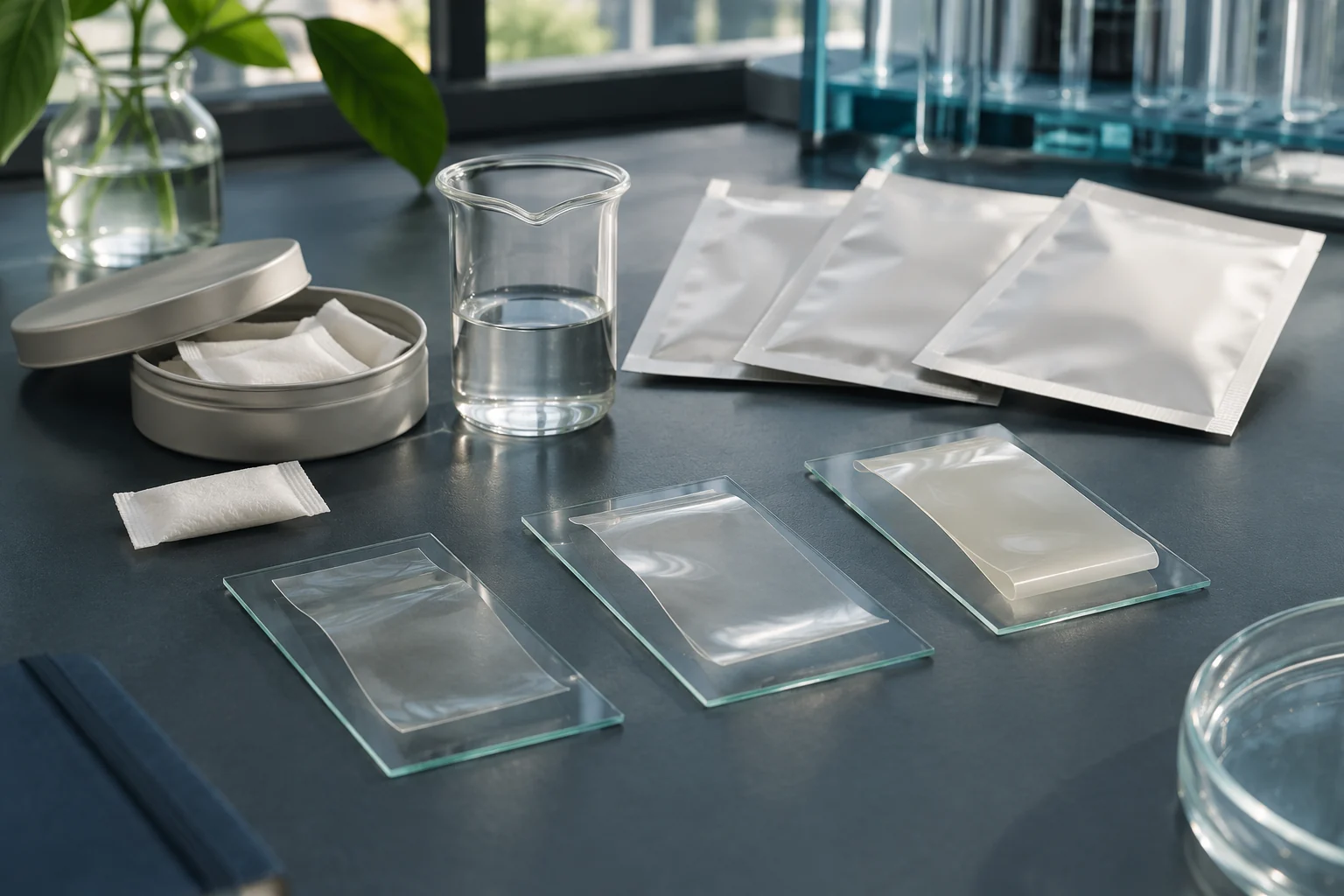
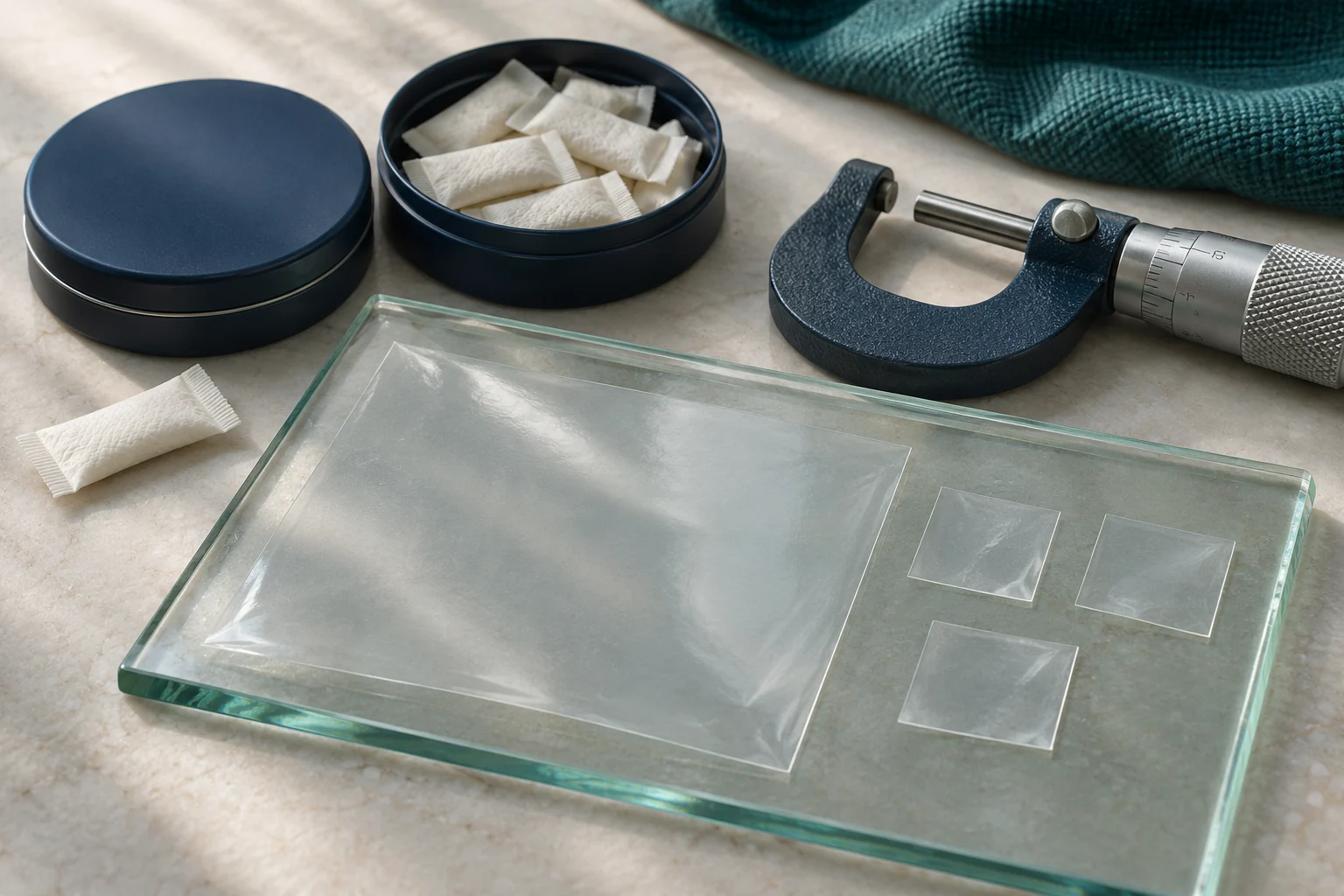
Oral films
Melatonin oral strips: from ingredient specification to a packaged film
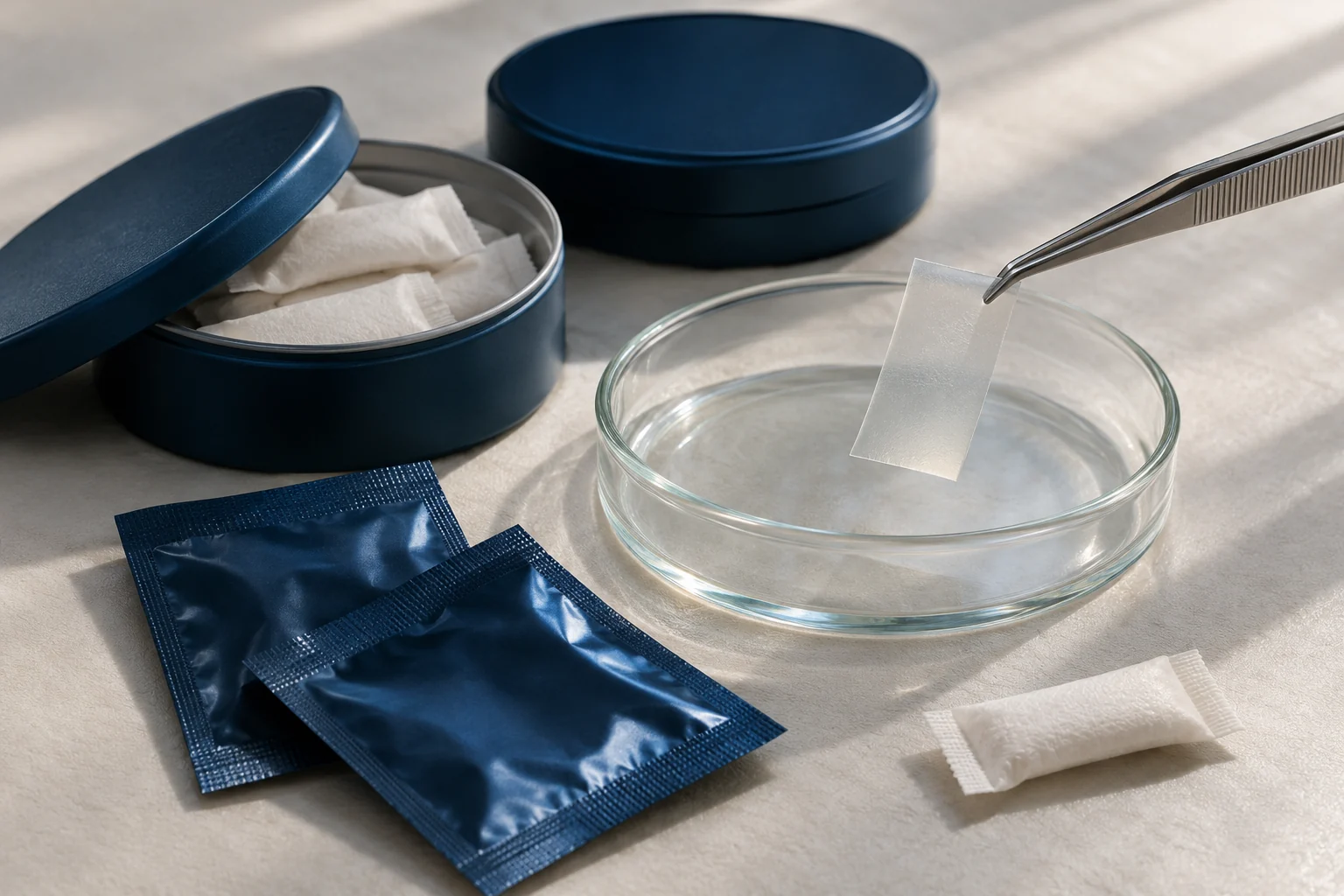
Editorial product illustration.
A melatonin oral strip project has three separate development questions: whether the intended product can be marketed in the destination, whether the formula can be manufactured consistently, and whether the finished pack remains acceptable through its proposed shelf life. Resolve all three before approving artwork or commercial quantities.
Define the product and destination
Specify the intended user, ingredient amount per strip, serving instructions, use route and proposed claims. Melatonin’s regulatory treatment differs between markets. US information from NCCIH and UK medicine information from the NHS illustrate why one country’s product positioning should not simply be copied into another. [1] [2]
Sunova presents melatonin oral strips as an available development and manufacturing category. The final specification and market suitability remain project-specific. Category availability is not evidence of a particular customer’s product authorization or a therapeutic outcome.
Develop the film system around the ingredient
Review melatonin identity, assay, particle or solution characteristics, impurities and compatibility with the film-forming system. The formulation also needs acceptable handling, taste and physical integrity. Adding an active to an existing blank film can change drying, brittleness, tack and distribution.
Original film research shows that active–polymer compatibility and process conditions need investigation. [3] Published results for another formulation do not establish the stability, delivery or clinical performance of a Sunova product.
Specify quality at the unit level
- Active content and a justified assessment of unit consistency.
- Strip dimensions, thickness or weight where relevant to process control.
- Appearance, flexibility, tack and removal from the primary pack.
- A defined disintegration or dissolution method, if used.
- Microbiological and other risk-based quality requirements.
- Finished-pack stability and packaging integrity.
Keep the approved method and acceptance criteria with each specification. A quick visual demonstration in water cannot substitute for an assay or establish what the body absorbs.
Protect the strip in its final pack
Evaluate moisture, light and oxygen exposure as relevant to the formulation. A single-strip sachet, liner and sealing process form one packaging system. Test removal and handling after storage as well as when freshly packed. Consider distribution excursions separately from ordinary storage.
Artwork should use the evidence and product category approved for the destination. Avoid converting “dissolves in the mouth” into promises about sleep onset, treatment or superior absorption. NCCIH describes important limits and uncertainties in melatonin evidence and safety; it does not validate an untested strip. [1]
Questions buyers ask
Do oral strips work faster than tablets?
A strip may disintegrate differently, but a faster clinical effect needs product-specific evidence. Dissolving time alone cannot establish sleep onset or absorption.
Can a strip be cut to create a smaller serving?
Do not assume equal active distribution across a strip. Cutting also changes handling and packaging. Follow the approved product instructions; a different strength should be developed and controlled as such.
Can the same melatonin label be used worldwide?
No. Classification, permitted claims, ingredient conditions and labeling need review for each destination and intended product.
Explore the product specifications
Sources & further reading
- NCCIH: Melatonin — What You Need To Know
- NHS: Melatonin medicine information
- Original study: Compatibility Assessment of a Novel Orodispersible Film Vehicle with Selected Active Ingredients
Sources checked November 7, 2026. External research and guidance are context; they are not test results or authorizations for a Sunova finished product.
Prepared by Sunova Pouches Editorial for B2B product development. Content is reviewed for sourcing and claim scope; it does not establish finished-product efficacy or market authorization.
Our editorial policy