Product development
Alpha-GPC and nootropic pouches: build the specification before the claim
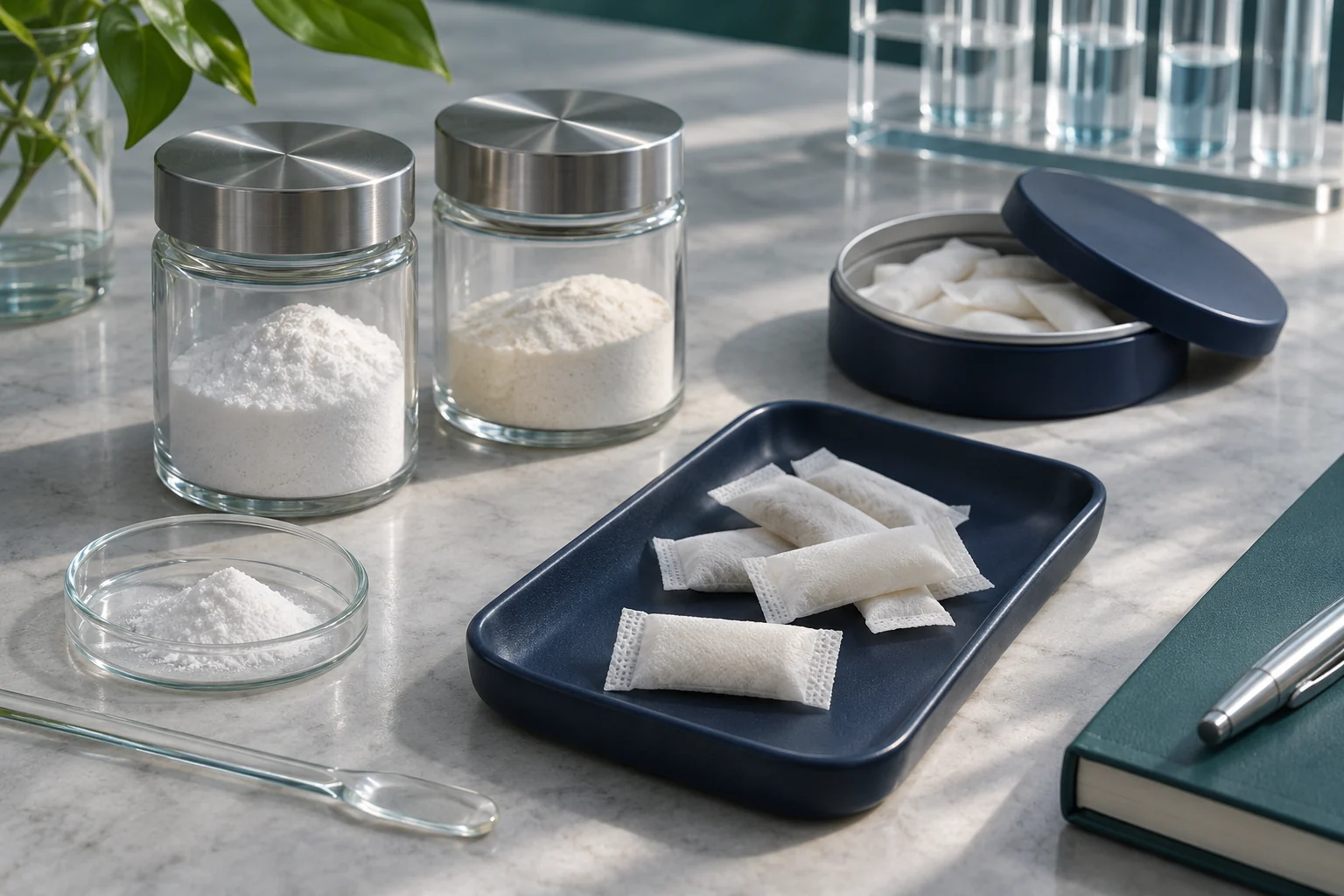
Editorial product illustration.
“Nootropic pouch” describes a market position, not a complete specification. For an Alpha-GPC or focus-positioned project, buyers need the exact ingredient form, active basis, proposed amount, stability requirements and evidence for the finished-product statements. A recognizable ingredient name cannot supply those details.
Define the Alpha-GPC material
Ask whether the proposed input is the neat material or a preparation on a carrier, and whether its stated potency is reported as Alpha-GPC, choline or another basis. Identify the supplier, source, carrier composition, moisture specification and analytical method. If a source involves soy-derived material, obtain the relevant allergen documentation rather than assuming the final declaration.
The NIH choline fact sheet describes choline as a nutrient and discusses several forms used in supplements. Those nutritional descriptions should not be converted into a claim that an untested pouch improves memory or concentration. [1] Verify the precise ingredient’s status and intended conditions of use in the destination market.
Check whether the target fits the pouch
The active preparation occupies part of the total fill weight. Carriers, flavor, sweetening and the moisture system also need space. Compare the mass of the proposed raw material with the desired pouch size and mouthfeel before setting a commercial label amount.
A material with a lower active concentration may require substantially more mass to deliver the same stated active quantity. That can affect flow, filling behavior and the available room for taste balancing. Make the potency basis visible in the calculation and confirm it with finished-product assay.
Review moisture and compatibility
Handle moisture sensitivity as a property of the actual supplied material. Review storage instructions and conduct compatibility work with the selected carrier, flavors and can. Inspect clumping, changes in texture, filling consistency and analytical recovery during development. Do not assume that switching from a capsule formula to a pouch preserves stability.
- Raw-material identity, potency basis and carrier composition.
- Target active amount per pouch and total fill-weight feasibility.
- Blend sampling, analytical recovery and unit-to-unit consistency.
- Moisture control, package barrier and relevant stability endpoints.
- Claim language supported by evidence relevant to the finished product.
Separate ingredient evidence from a finished-product claim
A study using an ingredient in another dose, formulation or route may help frame a research question. It does not automatically substantiate the proposed pouch. FTC’s health advertising guidance addresses the quality and relevance of substantiation, including whether the evidence matches the advertised product and claim. [2]
If the intended proposition is “focus without caffeine,” specify the caffeine exclusion separately and review all botanical inputs. If caffeine is included, declare and assess its total contribution. Keep medical or disease-treatment wording out of a product concept unless the appropriate evidence and regulatory route have actually been established.
Questions buyers ask
Does Alpha-GPC content equal choline content?
No. They are different reporting bases. The specification and label review must identify exactly which substance and amount a number represents.
Can a capsule formula be placed unchanged into an oral pouch?
It needs a fresh feasibility review. Pouch capacity, taste, contact conditions, material compatibility and the proposed delivery claims can differ from the original format.
Can “nootropic” appear on a product without clinical testing?
The term does not remove the obligation to substantiate the claims actually conveyed. Review the complete label, website and advertising in the intended jurisdiction, not only the product’s category name.
Explore the product specifications
Sources & further reading
Sources checked November 7, 2026. External research and guidance are context; they are not test results or authorizations for a Sunova finished product.
Prepared by Sunova Pouches Editorial for B2B product development. Content is reviewed for sourcing and claim scope; it does not establish finished-product efficacy or market authorization.
Our editorial policy