Product development
Vitamin and nutrition pouches: dose feasibility, stability and labeling
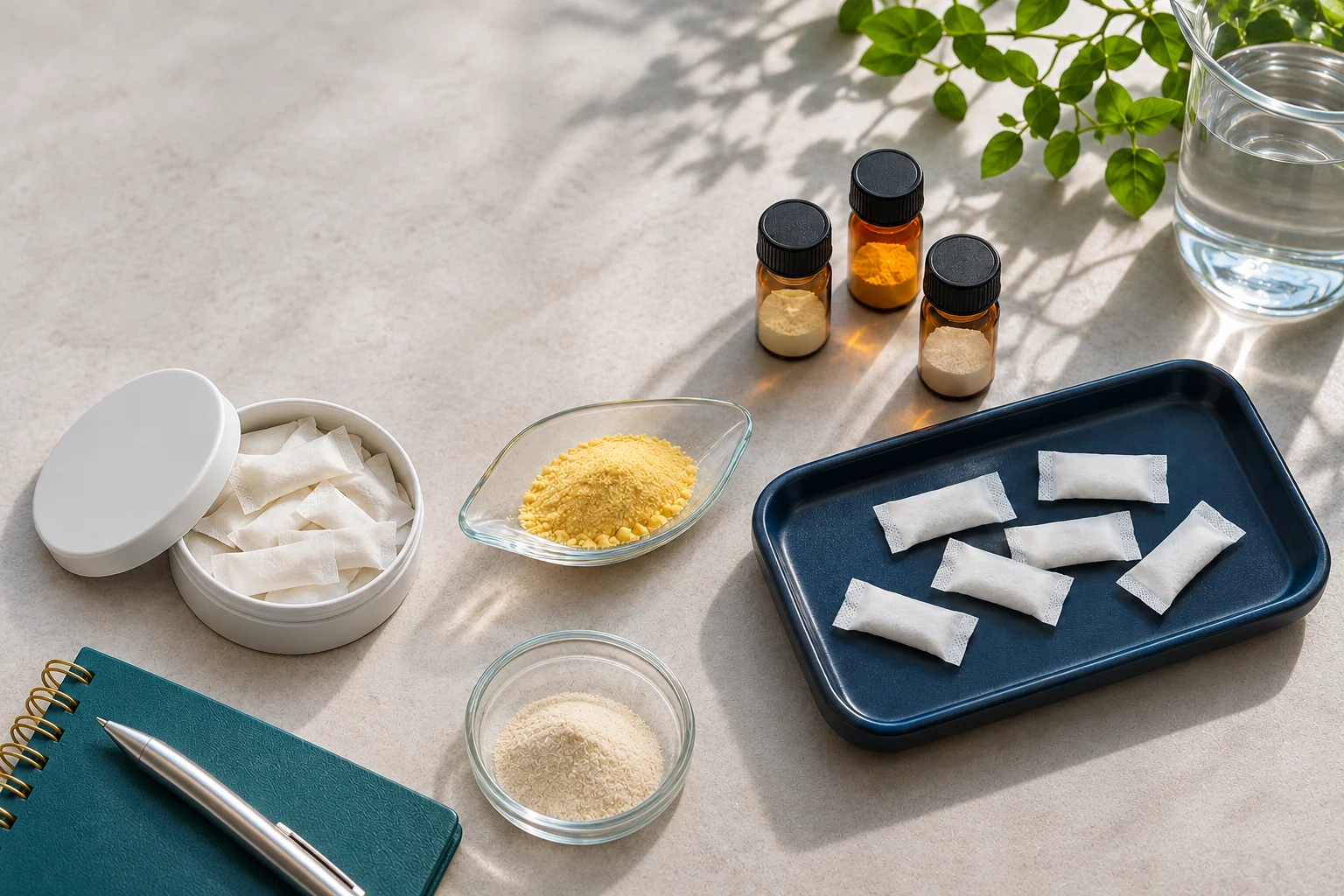
Editorial product illustration.
Vitamin and nutrition pouches often fail at the brief stage because the requested nutrient list is longer than the available fill capacity. Start by identifying the intended nutrients, their exact forms and the amount that must remain at the end of shelf life. Then test whether a usable pouch can carry that specification.
Keep nutrient units and ingredient mass separate
A nutrient declaration may use milligrams, micrograms or another legally specified unit. The purchased raw material may contain a carrier and have a potency expressed on a different basis. A manufacturing calculation must reconcile those units before any percentage or label claim is approved.
Vitamin B12 illustrates why form matters: the NIH fact sheet identifies several cobalamin forms and discusses their nutritional context. [1] A brand should name the actual proposed form and assay basis. A low nominal amount can also make blend distribution and sample preparation especially important.
Review physical feasibility
Different nutrient materials can have different particle sizes, densities, tastes and moisture responses. A mineral-rich concept may use more fill mass than a low-dose vitamin concept, even when both are called “nutrition pouches.” Reserve space for the carrier and sensory system, then evaluate fill weight and pouch dimensions together.
Reject the habit of specifying an ingredient only as a marketing name. Request the full preparation composition, relevant impurities, particle-size information and handling instructions. The actual material determines whether the blend flows, segregates, stains the pouch or becomes uncomfortable in use.
Design analytical and stability work
Agree methods that can recover and measure the nutrients from the complete pouch matrix. A method that works on a raw-material certificate may not be suitable after flavors, carriers and other nutrients are added. Sampling should address distribution through the blend and variation among finished units.
Stability work should use the commercial formula in the final packaging. Follow active recovery and relevant physical or sensory changes over the proposed storage period. Any overage needs a documented justification, a safety and labeling review and appropriate manufacturing controls; it should not be used to conceal an unexplained unstable formula. Applicable US supplement CGMP requirements address specifications and production controls. [2]
Approve the category and label together
The presence of vitamins does not automatically make every oral-contact format a dietary supplement. The intended route and use must fit the selected category. FDA’s supplement guidance describes products intended for ingestion and the claim categories that may apply. [3] A claim of delivery directly through the gums needs its own technical and regulatory assessment.
- Exact nutrient forms and the reporting units for each.
- Raw-material potency, carriers and relevant allergen information.
- Target per pouch, fill-weight feasibility and sensory acceptance.
- Finished-product assay, uniformity and stability methods.
- Destination-market category, label declarations and claim substantiation.
Questions buyers ask
Can every requested vitamin fit into one slim pouch?
Not necessarily. Raw-material potency, total mass, taste and compatibility need a feasibility calculation and samples. A longer ingredient list is not evidence of a better or workable product.
Does a B12 pouch automatically act faster than a swallowed supplement?
No. A format name does not establish comparative absorption or onset. That statement would need evidence suitable for the actual formulation and the exact comparison.
Should the release assay equal the end-of-shelf-life specification?
They are connected but can have different justified criteria. Define both, explain any expected change and confirm that the product remains within the approved specification over its claimed life.
Explore the product specifications
Sources & further reading
- NIH ODS: Vitamin B12, Health Professional Fact Sheet
- FDA: Dietary Supplement CGMP Small Entity Compliance Guide
- FDA: Questions and Answers on Dietary Supplements
Sources checked November 7, 2026. External research and guidance are context; they are not test results or authorizations for a Sunova finished product.
Prepared by Sunova Pouches Editorial for B2B product development. Content is reviewed for sourcing and claim scope; it does not establish finished-product efficacy or market authorization.
Our editorial policy