Formulation
Dry versus moist oral pouches: compare the complete formulation system
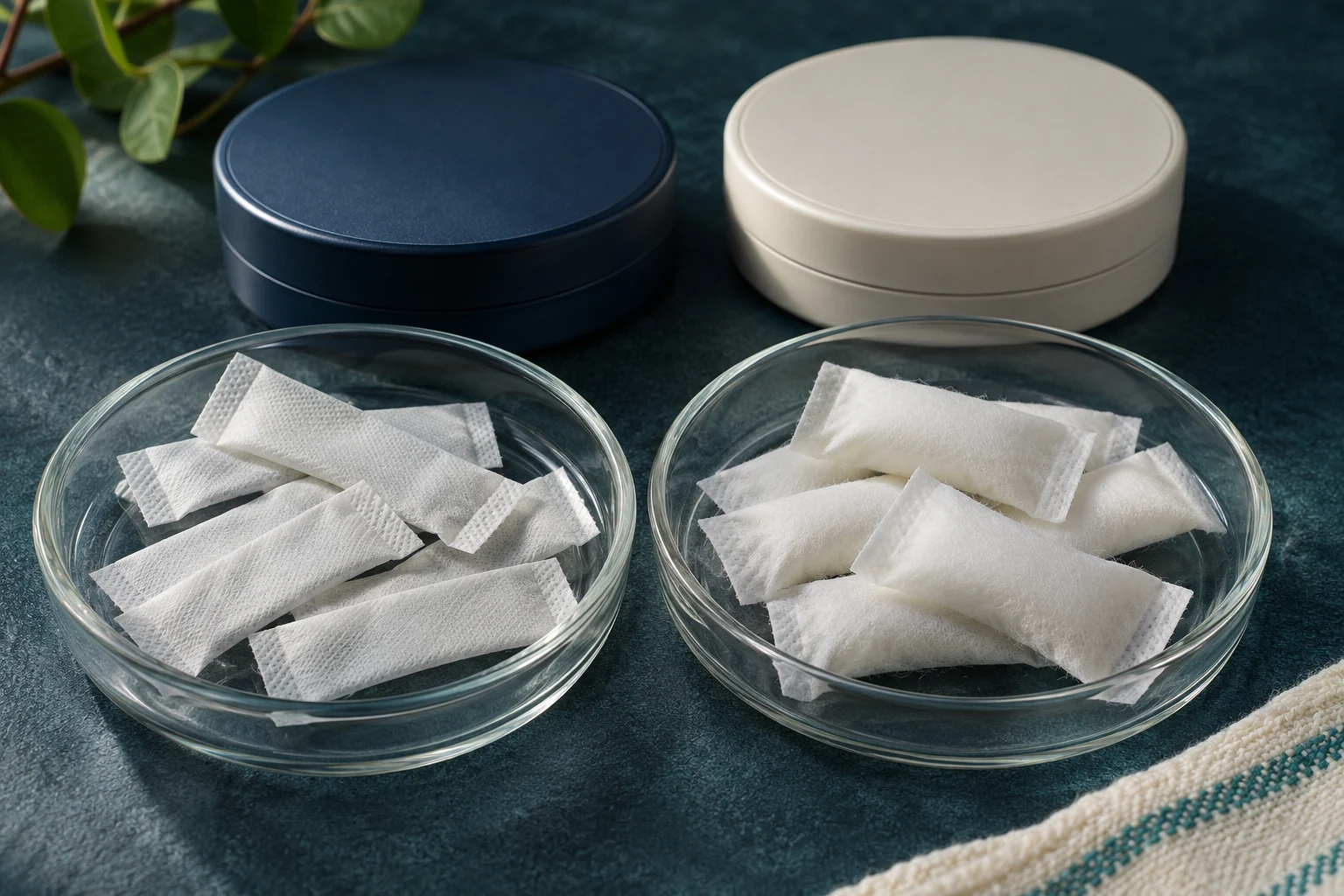
Editorial product illustration.
“Dry” and “moist” are useful descriptions of pouch formats, but they do not replace a formulation specification. Two pouches that feel equally dry can differ in water activity, carrier behavior, flavor release and package requirements. Compare measured properties and the intended experience, not only a category name.
Specify the properties behind the description
Set the fill weight, moisture measurement method, water activity where relevant, particle characteristics and pouch dimensions. Identify the humectant and carrier system as part of the controlled formula. A percentage reported as moisture needs a defined method and basis before it can be compared with another supplier’s number.
Water activity describes water’s thermodynamic availability in the material, while moisture content describes an amount measured by a particular procedure. The relationship depends on composition and conditions. FDA’s technical guide explains the equilibrium and temperature considerations behind water activity. [1]
Evaluate the first minutes and the full use period
Early flavor perception, later flavor persistence and mouthfeel may move in different directions. Use a defined assessment procedure to record these attributes separately. Include the pouch web, seam and particle retention in the evaluation; the contents alone do not determine the experience.
A release study can help compare prototypes if the method is held constant. It cannot establish human absorption merely because material enters a laboratory medium quickly. Original nicotine-pouch research demonstrates the importance of formulation and test conditions to release and permeation; other actives need their own evidence. [2]
Consider the manufacturing window
A drier system can have different flow and dust-control needs from a more cohesive formulation. Moisture distribution, hold time before filling and ambient conditions may affect production consistency. During pilot work, record changes through the run rather than testing only a retained sample from the beginning.
Review whether powder or moisture enters the seal zone, whether pouches remain dimensionally consistent and whether the line can maintain the agreed fill. A material change that improves one sensory attribute can make filling or sealing less consistent. The process and specification should be approved together.
Use the commercial package for the comparison
Track the formats in their proposed cans under justified storage conditions. Repeated opening may be relevant to intended use. Compare moisture or water activity, flavor, pouch feel, active recovery and package function as appropriate. A sealed prototype bag may not predict the performance of a repeatedly opened can.
- Defined moisture and water-activity methods.
- Fill weight, web, pouch dimensions and seam construction.
- Controlled sensory and relevant release comparisons.
- Pilot-run observations and hold-time controls.
- Final-package stability and opening-use assessment.
Questions buyers ask
Is a moist pouch automatically stronger?
No. Active amount, formulation, release conditions and perception are different variables. A moisture description alone cannot establish strength or exposure.
Can water be added to a dried-out commercial pouch?
That changes the supplied formulation and can affect microbial quality, release and consistency. Evaluate the original condition against the product’s instructions and quality process instead of reconditioning it informally.
Can two suppliers’ moisture percentages be compared directly?
Only after confirming the method, preparation, reporting basis and sampling conditions. Matching numbers from different procedures may describe different properties.
Explore the product specifications
Sources & further reading
- FDA: Water Activity (aw) in Foods
- Original study: Evaluation of Factors Impacting Nicotine Permeation in Oral Nicotine Pouch Products
Sources checked November 7, 2026. External research and guidance are context; they are not test results or authorizations for a Sunova finished product.
Prepared by Sunova Pouches Editorial for B2B product development. Content is reviewed for sourcing and claim scope; it does not establish finished-product efficacy or market authorization.
Our editorial policy