Formats & materials
Can closure, freshness and used-pouch compartments: what each feature does
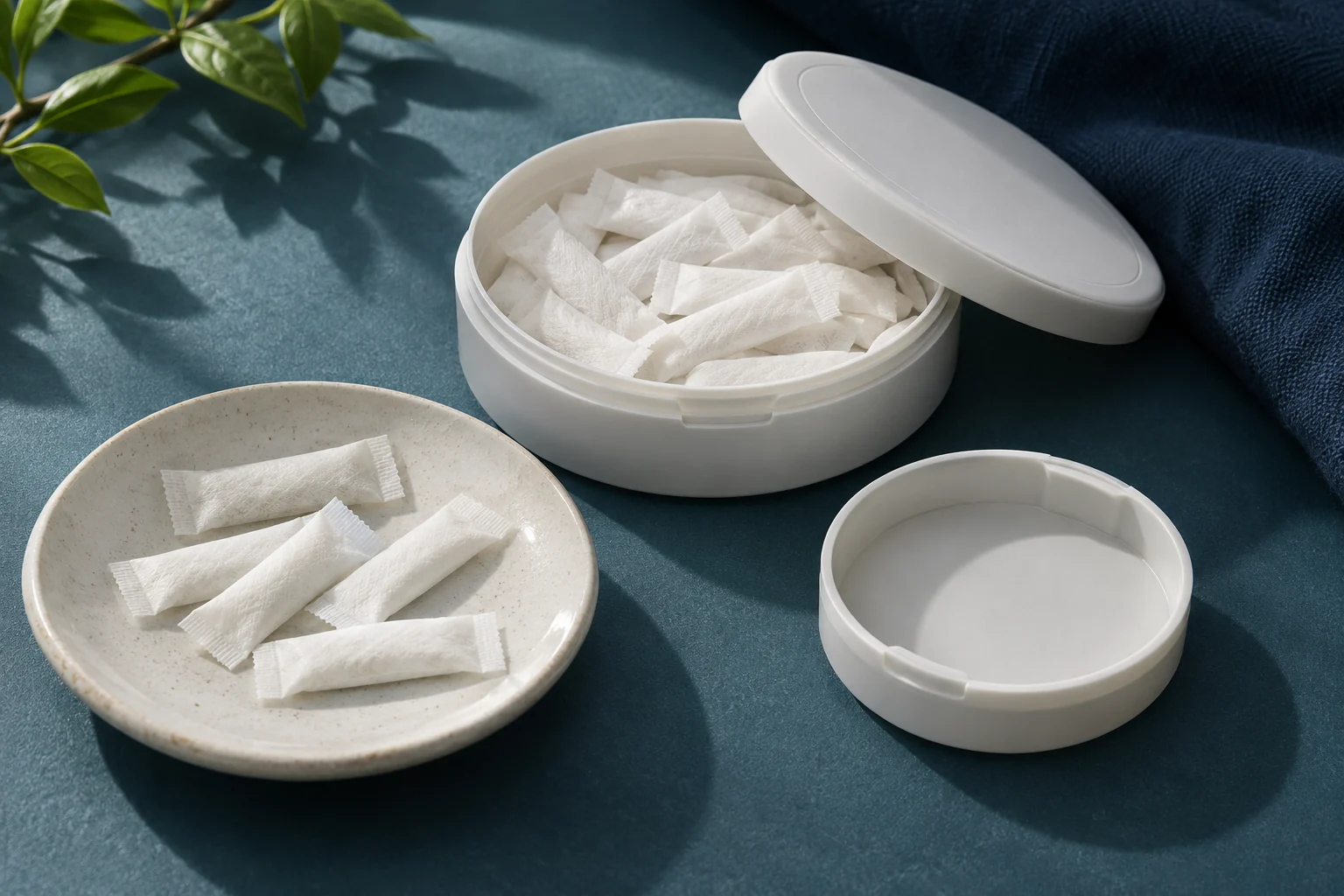
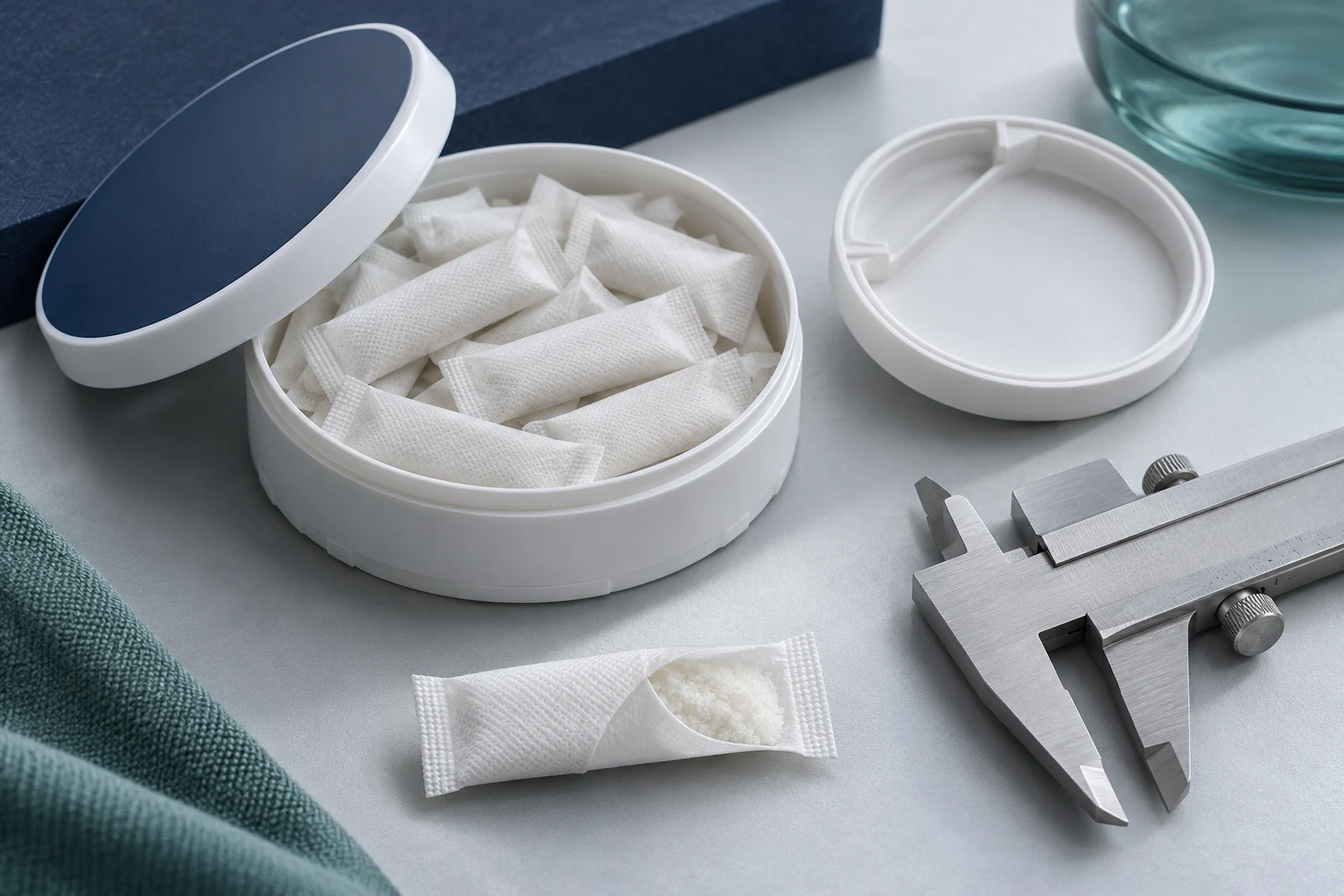
Editorial product illustration.
A lid that closes, a package that preserves flavor and a compartment for used pouches perform different jobs. Buyers should specify and evaluate each feature separately. A convenient lid feature cannot establish moisture barrier performance or safe storage of the fresh product.
Define the closure function
Specify how the can should open, close and remain closed during expected handling. Assess alignment, damage, repeated use and the effect of a filled pack. A closure that works on an empty sample may behave differently when a pouch is trapped near the rim.
Agree how the closure will be checked and which defects are unacceptable. Use physical samples from the proposed component revision and consider the packing operation. Fit, opening force and seal or liner design should be reviewed as parts of the complete configuration.
Investigate freshness in the final pack
Flavor and moisture changes can be influenced by the formula, package materials, closure, storage and opening pattern. “Airtight” should not be used as an undefined substitute for test evidence. Choose measurements relevant to the failure being considered, such as mass change, active recovery, sensory change or package integrity.
Where water activity is part of the control strategy, measure it under a defined procedure rather than estimating it from a lid’s appearance or the feel of the pouch. [1] Use the final pack in the stability program and document whether the study describes unopened storage or repeated use.
Keep used and fresh products separate
A used-pouch compartment is a convenience feature. It does not sterilize used material, convert waste into a recyclable material or make the whole can child-resistant. Evaluate whether the compartment is physically separated from fresh pouches and whether its intended use is explained clearly.
Used pouches may retain active ingredients. Disposal and storage instructions should reflect the finished product, especially where nicotine or another substance creates a concern for children or animals. A compartment should not be presented as a reason to leave a pack within their reach.
Qualify materials and claims
Review the can body, lid, liner and any insert for the actual use. FDA’s packaging inventories identify relevant regulatory resources; the complete material and conditions still need assessment. [2] If a component is changed, revisit fit, barrier and stability as appropriate.
- Closure design and function with the commercial filled pack.
- Defined integrity or barrier questions and suitable methods.
- Unopened and relevant opening-use stability conditions.
- Separation and instructions for any used-pouch compartment.
- Distinct evidence for environmental or child-resistant statements.
Questions buyers ask
Does a tight-feeling lid prove that a pouch will stay fresh?
No. Barrier performance and the full package environment need evaluation over the relevant storage and use period.
Can fresh pouches be stored in the used-pouch compartment?
Use the product’s intended configuration and instructions. Do not assume the compartment provides the same protection or cleanliness as the fresh-product chamber.
Can a used-pouch compartment replace child-resistant testing?
No. Convenience storage and a substantiated child-resistant packaging claim are separate questions.
Explore the product specifications
Sources & further reading
Sources checked November 7, 2026. External research and guidance are context; they are not test results or authorizations for a Sunova finished product.
Prepared by Sunova Pouches Editorial for B2B product development. Content is reviewed for sourcing and claim scope; it does not establish finished-product efficacy or market authorization.
Our editorial policy