Product development
Oral-care and breath-freshening pouches: sensory and claim boundaries
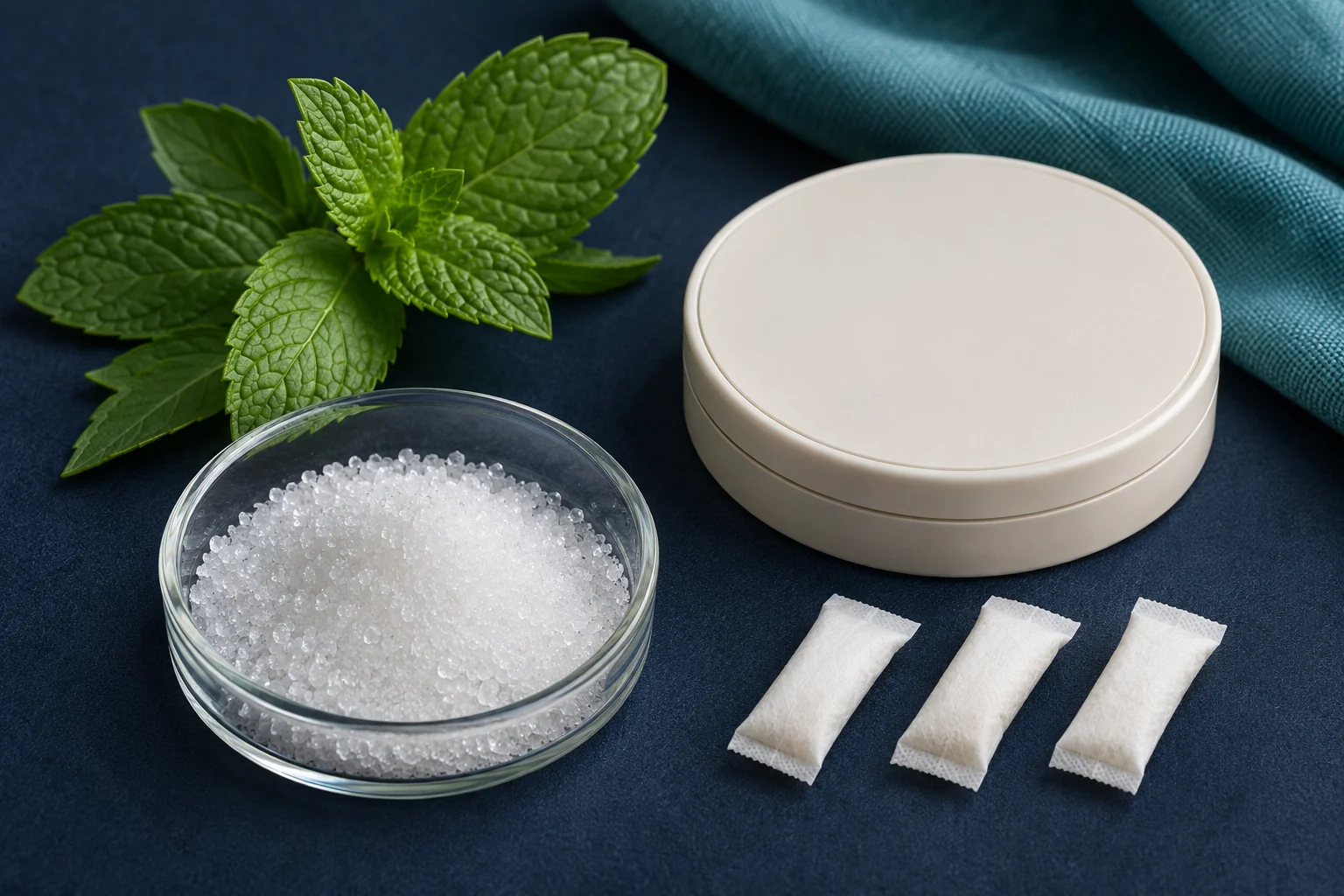
Editorial product illustration.
An oral-care pouch can be designed around breath freshness, a cooling experience or a more specific intended use. The distinction matters because a sensory description and a disease-related claim need different support. Define the desired consumer experience and the proposed label statements before choosing ingredients.
Write a sensory specification that can be evaluated
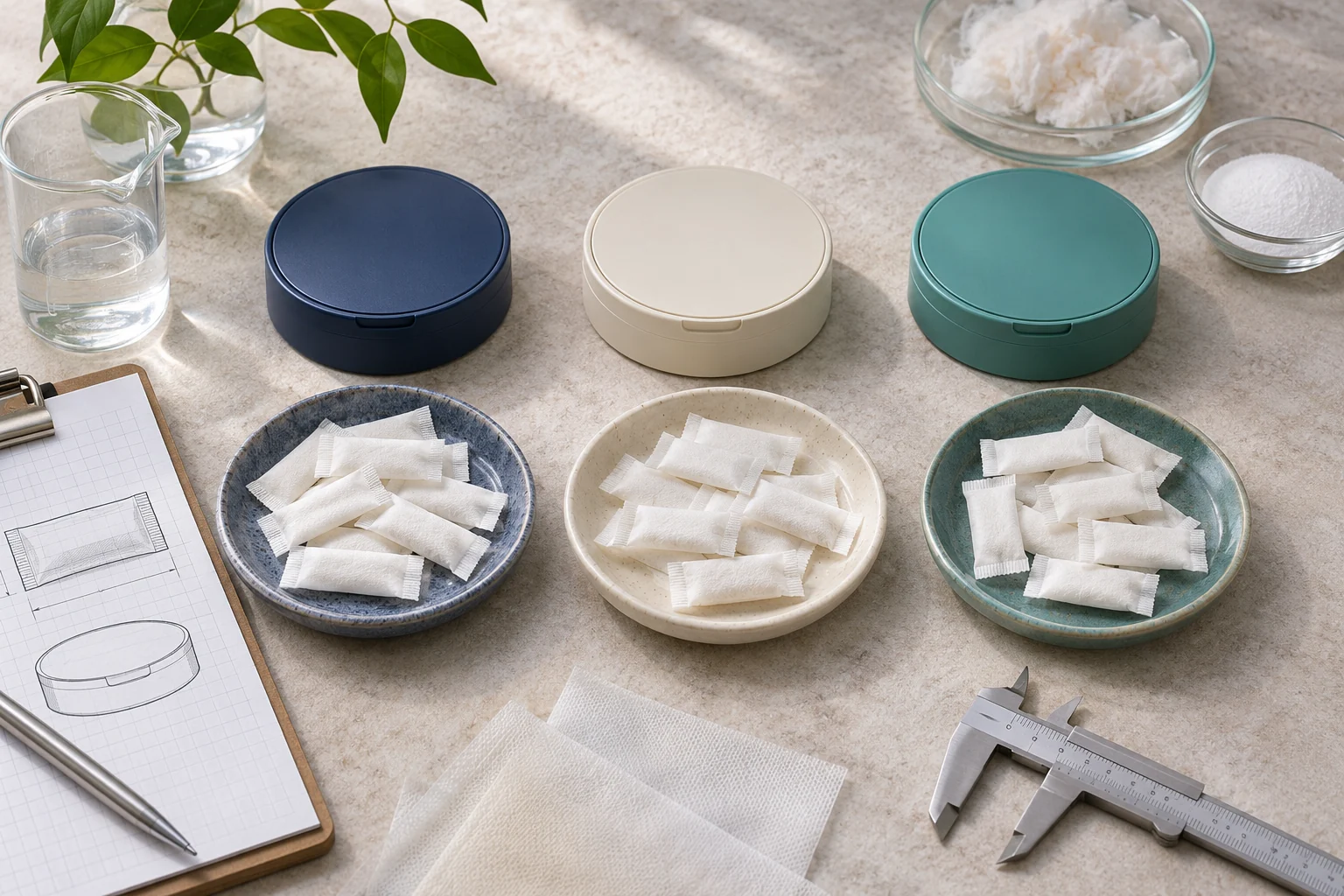
Specify mint character, sweetness, cooling intensity, bitterness, pouch feel and aftertaste separately. “Strong mint” can mean a sharp aroma, intense cooling or prolonged flavor, and those requests can lead to different formulations. Use coded samples and a repeatable evaluation procedure to resolve the difference.
Agree when the sample is assessed and whether storage is part of the evaluation. A formula that tastes balanced on the first day may change as flavor components interact with the carrier and packaging. Include fresh and aged sensory checks where relevant to the claimed product life.
Review the complete ingredient preparation
Flavorings, sweeteners, botanical extracts and other ingredients may arrive as preparations containing carriers or processing aids. Obtain their full specifications and relevant allergen information. A mint picture cannot establish that a formula contains mint leaf, and an ingredient’s familiar food use does not automatically settle its suitability for a different exposure pattern.
If probiotics, zinc-containing materials or another specialist ingredient is proposed, establish its identity, amount, compatibility and intended claim. For probiotic concepts, the strain and viable-count specification need particular attention; evidence for one strain cannot simply be assigned to another. [1]
Distinguish freshness from treatment
A description of flavor or breath freshness should not drift into unsupported statements about treating gum disease, cavities or infection. Read the overall impression created by the product name, images, testimonials and article copy. Health claims need substantiation relevant to what a reasonable consumer would understand. [2]
For a US project, product classification should be reviewed with the intended route, composition and claims. FDA’s supplement framework is not a general authorization for all mouth-contact products. [3] A manufacturer should resolve those questions before preparing final commercial artwork.
Investigate comfort without treating it as proof of efficacy
Tingling does not measure breath-freshening performance or ingredient delivery. Review pouch dimensions, seams, particles, cooling system and the method used to assess the formulation environment. A complaint of burning should trigger a product-quality and safety review; increasing flavor intensity is not a substitute for that review.
- Measurable sensory attributes and an agreed sample protocol.
- Full material specifications, including carriers and allergens.
- Physical pouch comfort, seam integrity and particle retention.
- Stability of flavor, active ingredients and packaging.
- Claims appropriate to the product category and evidence.
Questions buyers ask
Does a cooling sensation prove an oral-care effect?
No. Cooling is a sensory attribute. Any statement about a health outcome needs suitable evidence for the actual product.
Can an oral-care pouch replace brushing or professional dental care?
It should not be presented as a replacement on the basis of flavor or convenience. Review the specific intended use and keep instructions consistent with the evidence and category.
Can a stronger mint mask an irritating formula?
A formulation that causes discomfort needs investigation. Evaluate the material and sensory system rather than treating irritation as a desirable intensity cue.
Explore the product specifications
Sources & further reading
- NIH ODS: Probiotics, Health Professional Fact Sheet
- FTC: Health Products Compliance Guidance
- FDA: Questions and Answers on Dietary Supplements
Sources checked November 7, 2026. External research and guidance are context; they are not test results or authorizations for a Sunova finished product.
Prepared by Sunova Pouches Editorial for B2B product development. Content is reviewed for sourcing and claim scope; it does not establish finished-product efficacy or market authorization.
Our editorial policy