Formats & materials
Recyclable and child-resistant packaging: two claims that need different evidence
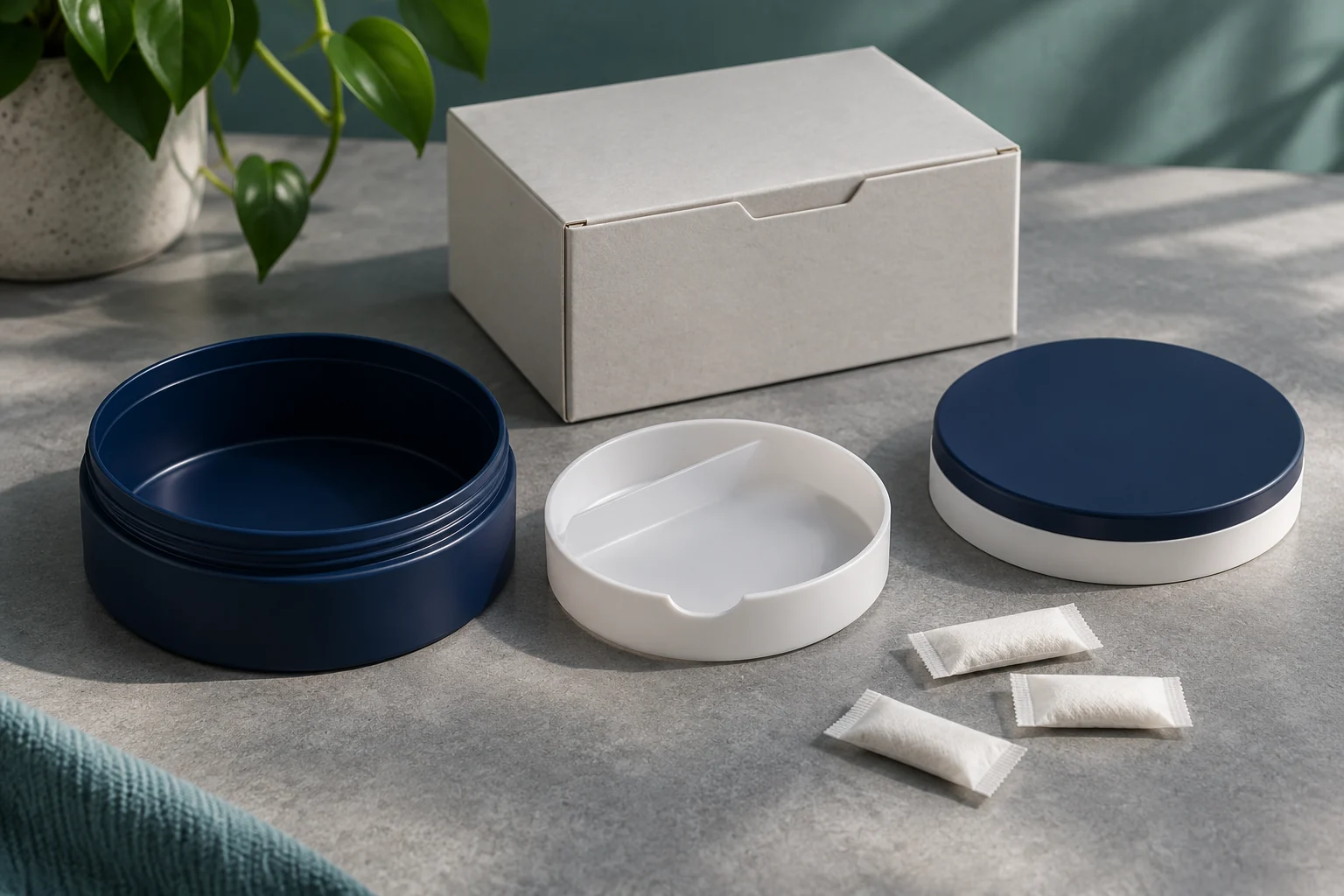
Editorial product illustration.
A pack can be recyclable without being child-resistant, and child-resistant without having a substantiated recycling claim. These statements concern different performance and evidence. Treat them as separate requirements in the packaging brief, specification and artwork review.
Evaluate the complete recycling statement
Identify the materials in the can body, lid, insert, label and any liner. Review whether the complete configuration can be collected, sorted and processed in the intended market. A resin name or recycling-style symbol cannot, by itself, answer those questions.
The FTC Green Guides summary explains why environmental claims should be specific and appropriately qualified. [1] A claim about the can should not imply that the filled product, used pouch or every component has the same disposal route. Keep the consumer instruction aligned with the evidence.
Keep biodegradable and compostable claims distinct
A plant-derived fiber or a partly bio-based component does not establish the behavior of the entire used pack. Relevant conditions and the complete material matter. If a composting claim is proposed, ask which environment and evidence support it, and whether residues or other components change the answer.
Avoid a broad “eco-friendly” claim that cannot be explained in concrete terms. A narrower, documented statement about a particular component or material attribute is easier for buyers and consumers to interpret accurately.
Define the child-resistant requirement
First determine which rules and standards apply to the actual product and destination. CPSC’s Poison Prevention Packaging Act business guidance describes the US framework for products within its scope. [2] Do not assume every pouch can is covered by one universal rule, or that a commercial model name is a test report.
A claim should identify the complete tested packaging configuration and supporting evidence. Review whether a component, instruction or product change affects the applicability of that evidence. Child-resistant packaging is intended to reduce access; it should not be represented as a guarantee that no child can open it.
Approve evidence with the component revision
- Material and component list for the commercial configuration.
- Specific environmental statement and relevant market conditions.
- Applicable child-resistant requirement and the evidence requested.
- Tested configuration, instructions and controlled drawing revision.
- Change-control process for materials, closures and labels.
These reviews should occur before production artwork is locked. A decorative seal or symbol can communicate a claim even when the accompanying words are cautious. Confirm the overall impression created by the final pack.
Questions buyers ask
Does a supplier’s “child-proof can” model name establish compliance?
No. Request applicable test documentation for the actual configuration and assess the market’s requirements. A name is not performance evidence.
Can a recyclable can make the used pouch recyclable?
No. Assess the pouch and its residues separately from the container, and provide disposal instructions appropriate to the complete product.
Can a logo be used instead of explaining an environmental claim?
A symbol can itself imply a broad claim. Its meaning, authorization and substantiation should be reviewed alongside the written label.
Explore the product specifications
Sources & further reading
- FTC: Environmental Claims — Summary of the Green Guides
- CPSC: Poison Prevention Packaging Act Business Guidance
Sources checked November 7, 2026. External research and guidance are context; they are not test results or authorizations for a Sunova finished product.
Prepared by Sunova Pouches Editorial for B2B product development. Content is reviewed for sourcing and claim scope; it does not establish finished-product efficacy or market authorization.
Our editorial policy