Formats & materials
Match the pouch to the can: dimensions, fill count and headspace
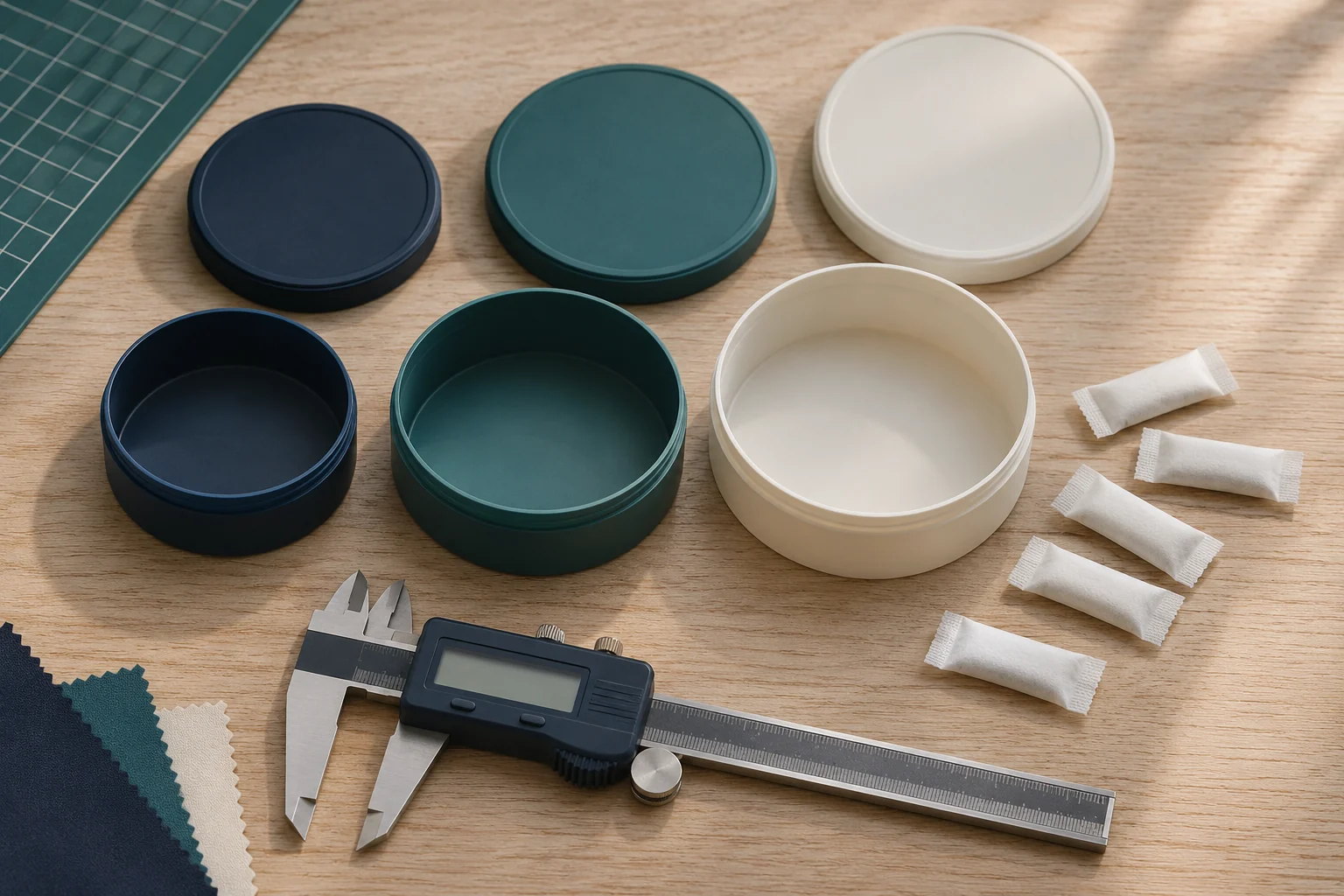
Editorial product illustration.
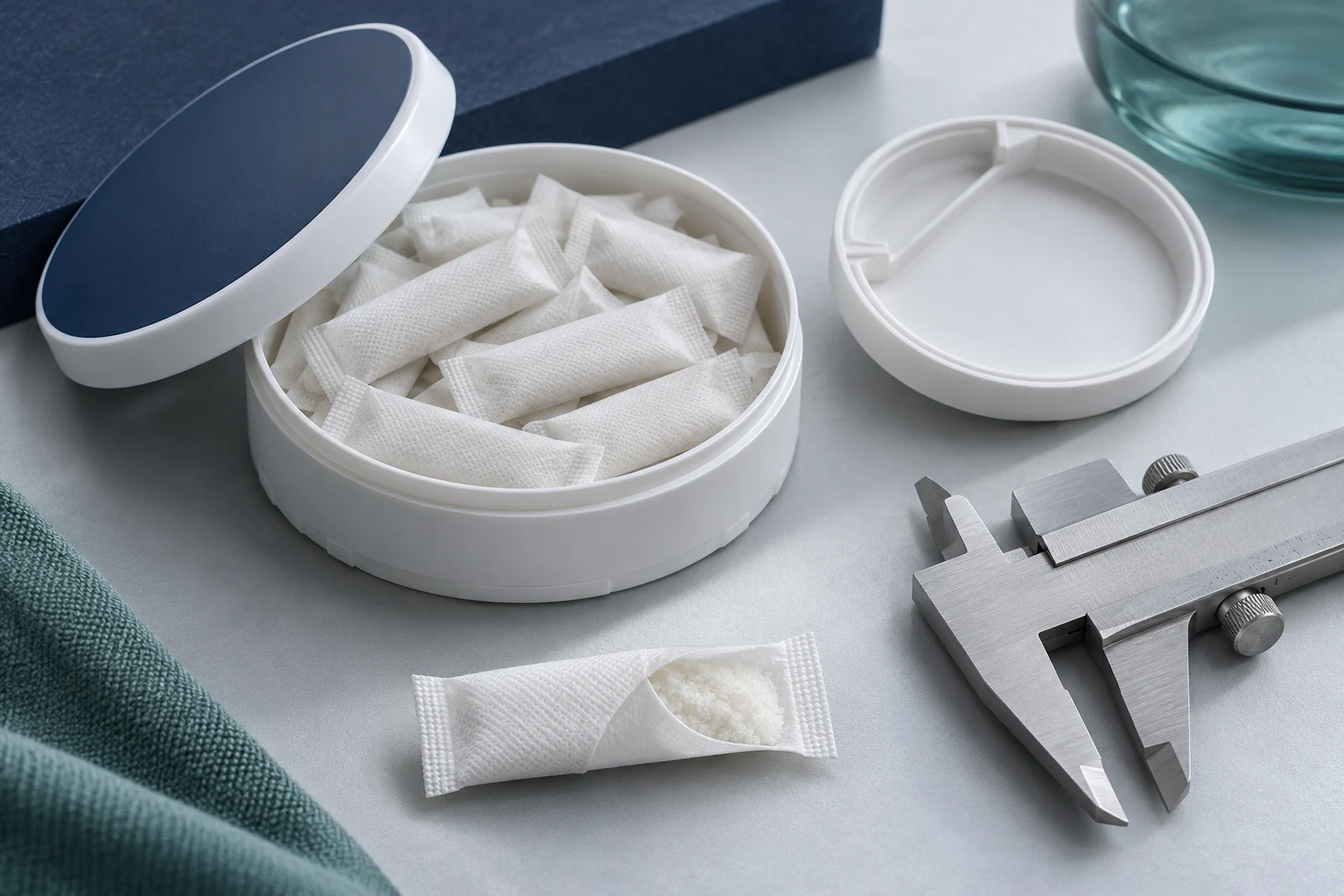
A can and a pouch should be approved as one packaging configuration. Can diameter alone does not establish capacity, and pouch fill weight alone does not establish its occupied volume. Verify the actual geometry, unit count, closure and packing method with a physical sample.
Use controlled dimensions
Start with the can model and current drawing revision. Distinguish external dimensions from the usable internal space, and account for features such as inserts or a separate lid compartment. Confirm which dimensions and tolerances are relevant to the filling and packing operation.
Sunova’s format library presents 22 can models with their supplied dimensions and actual model photographs. Those references help shortlist options. The final project should still approve the physical component and drawing because a model name or a similar-looking competitor can cannot establish interchangeability.
Check the pouch under the intended condition
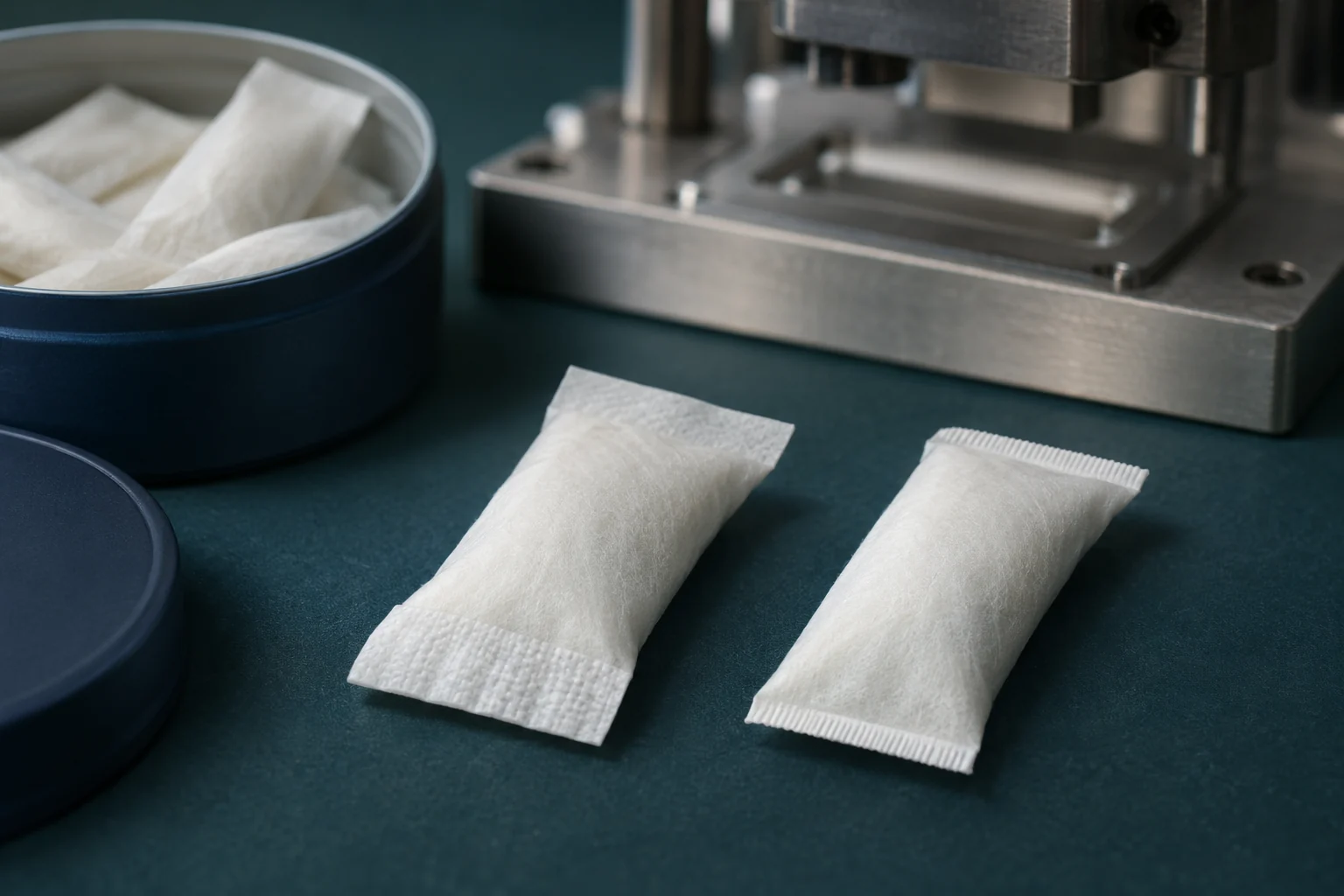
Record pouch length, width, seam construction, fill weight and the condition in which it will be packed. Carrier density and moisture can affect shape and packing behavior. Test the chosen pouch count with samples representative of the proposed product.
Check whether units are compressed, caught at the closure or difficult to remove. Excess space can also affect presentation and movement in transit. The acceptable result depends on the product and packing process, so avoid treating the fullest possible can as the automatic target.
Separate count from mass
State both the number of pouches per can and the relevant finished-unit mass specification. A component carton quantity is not the finished-product MOQ, and the raw-material bulk density is not the finished can’s usable capacity. Keep these numbers separate in the purchasing brief.
- Can model, material, drawing revision and closure configuration.
- Finished pouch dimensions, seam and fill specification.
- Count per can and approved packing arrangement.
- Closure clearance, removal experience and transport behavior.
- Commercial artwork, coding and final-pack quality checks.
Review the package’s other jobs
The pack also needs to preserve the product and communicate its identity. Material suitability and barrier performance should be considered alongside fit. FDA packaging inventories can support a material review, but they do not replace assessment of the proposed finished configuration. [1]
Use the selected can in stability and transport work. A larger can, an added compartment or a different closure can change the package environment even when the formula is unchanged. Treat a component substitution as a controlled change with an appropriate assessment.
Questions buyers ask
Can every slim pouch fit into the same slim can?
No. Actual dimensions, fill behavior, seam construction and unit count determine fit. Approve the complete configuration rather than relying on the word slim.
Does a 20-pouch can always contain the same total mass?
No. Unit count and unit fill weight are separate specifications. Verify both for the proposed product.
Can the can be selected after the formula is finalized?
It can be shortlisted later, but final approval needs the pouch and pack together. Earlier packaging review helps avoid repeating sensory, stability or transport work.
Explore the product specifications
Sources & further reading
Sources checked November 7, 2026. External research and guidance are context; they are not test results or authorizations for a Sunova finished product.
Prepared by Sunova Pouches Editorial for B2B product development. Content is reviewed for sourcing and claim scope; it does not establish finished-product efficacy or market authorization.
Our editorial policy