Quality & stability
Pouch irritation complaints: investigate the product, preserve the evidence
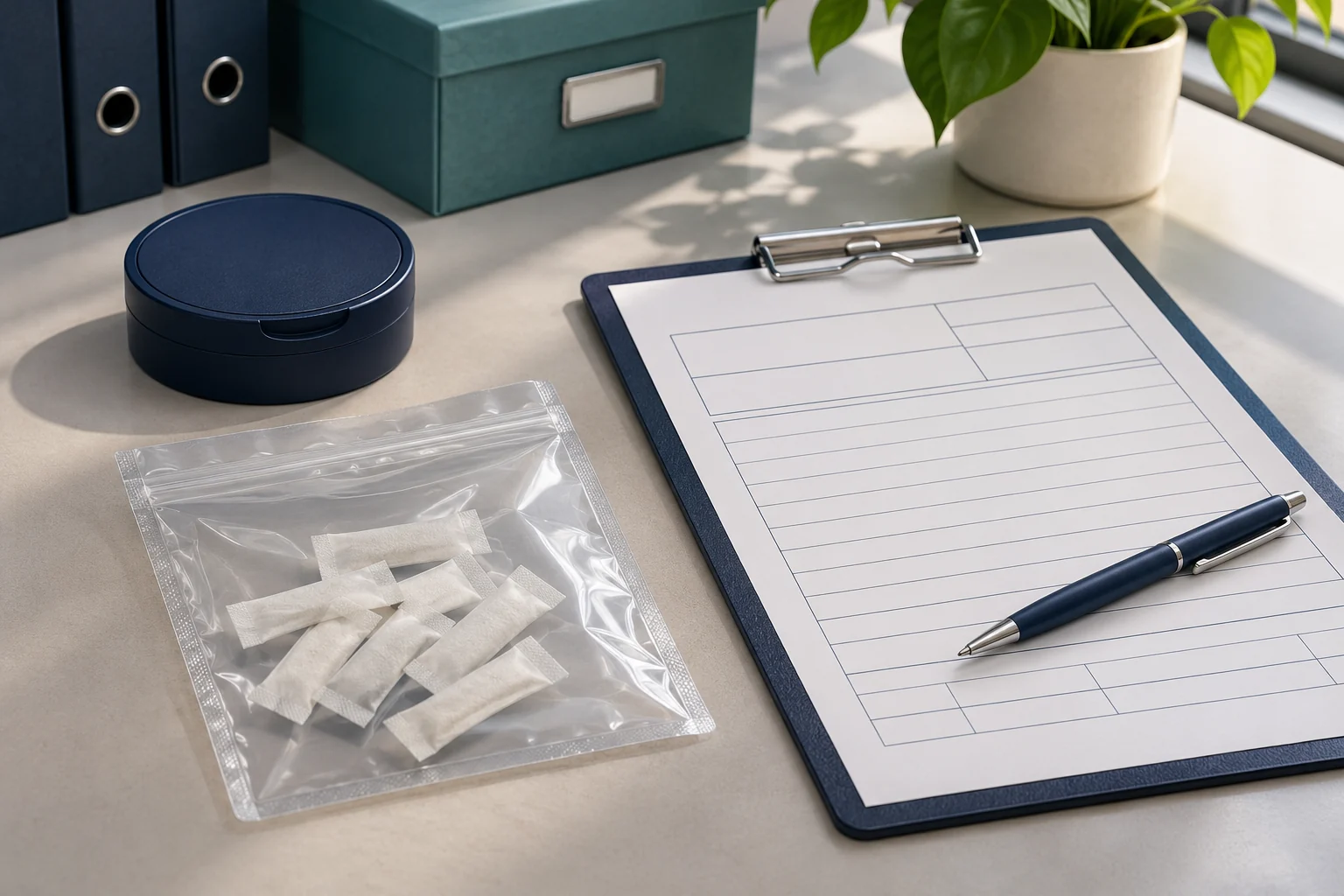
Editorial product illustration.
A report of gum irritation deserves a documented response, including when the product is nicotine-free. Sensation is not evidence that an active is working. A manufacturer should preserve the relevant product and batch information, assess the report and investigate without diagnosing the consumer from a message or photograph.
Capture the report without minimizing it
Record product name, batch, flavor, packaging, purchase channel, use conditions, timing and the consumer’s description. Ask only for information relevant to the investigation and handle health information appropriately. Preserve unopened units and photographs where available.
A consumer reporting irritation should stop using the product and seek appropriate clinical advice for persistent or concerning symptoms. The manufacturer’s complaint process should not encourage continued use to “get used to” pain or use a stronger sensation as a quality claim.
Investigate the product system
Potential factors include flavor intensity, cooling agents, acidity or alkalinity, ingredient sensitivity, pouch surface, seam construction, fill behavior and use conditions. These are investigation hypotheses, not a diagnosis of the reported event.
Compare complaint samples with retained units and the approved specification. Review raw-material lots, process records, pH method, moisture, physical integrity and relevant analytical results. Examine whether reports cluster by batch, flavor, time or packaging configuration.
Separate evidence from assumptions
- Distinguish the consumer’s observations from laboratory findings.
- Record deviations and whether the affected material was representative.
- Assess plausible product-related causes without dismissing alternatives.
- Document corrective actions and any product disposition decision.
- Evaluate whether other batches or variants need review.
A passing COA does not automatically explain a complaint. Equally, one report may not establish causation. Keep both the evidence and its limits in the investigation record.
Review reporting and communication duties
Applicable adverse-event reporting requirements depend on the product category and market. FDA provides guidance on serious adverse-event reporting and recordkeeping for dietary supplements within its scope. [1] Assign responsibility in the quality agreement and escalate promptly when required.
Do not use community anecdotes as proof that a particular ingredient caused or cannot cause irritation. Public questions can identify issues worth investigating; the response should rely on the actual product, appropriate testing and qualified clinical or regulatory input where needed.
Questions buyers ask
Can a nicotine-free pouch still cause irritation?
Nicotine-free describes one composition attribute. It does not establish freedom from irritation or sensitivity to other ingredients, materials or use conditions.
Does tingling prove better absorption?
No. A sensory response cannot quantify absorption or demonstrate a health benefit.
Does a passing batch COA close a complaint?
No. The investigation should assess the reported event and relevant product factors. A COA is one piece of evidence, not an automatic explanation.
Explore the product specifications
Sources & further reading
Sources checked November 7, 2026. External research and guidance are context; they are not test results or authorizations for a Sunova finished product.
Prepared by Sunova Pouches Editorial for B2B product development. Content is reviewed for sourcing and claim scope; it does not establish finished-product efficacy or market authorization.
Our editorial policy