Formats & materials
What is an oral pouch made of? Nonwoven fibers, binders and plastic-free claims
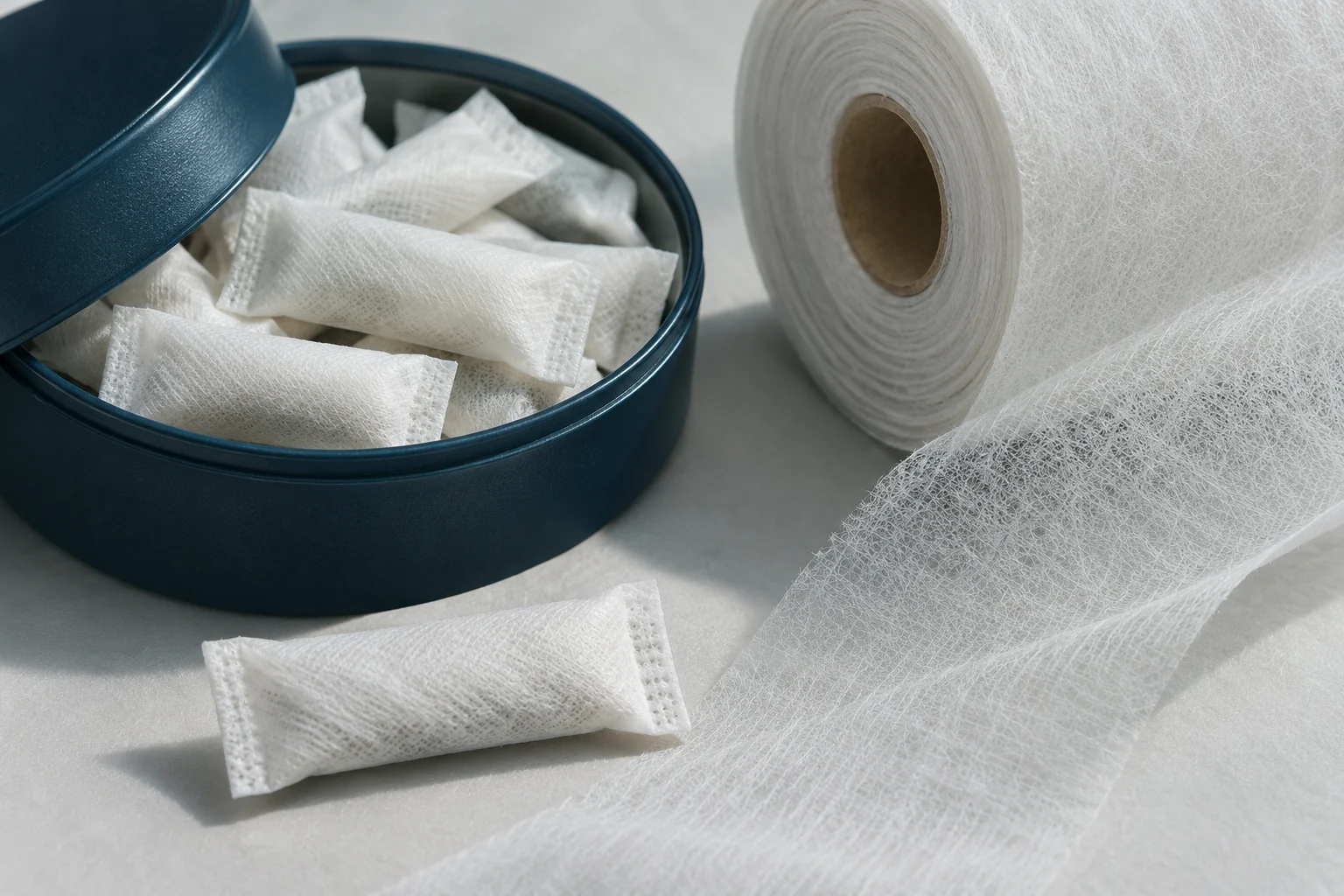
Editorial product illustration.
The white web around an oral pouch can look simple while containing several material components. “Plant fiber” may describe an important constituent without describing the binder, coating, sealable component or additives. Buyers asking about plastic-free or biodegradable pouches need the specification for the complete web.
Request the complete material description
Ask for the fiber composition, basis weight, relevant additives and sealing compatibility. Identify which information is confidential and how the manufacturer can still substantiate the statements it makes to the buyer. A generic cellulose description should not be treated as a complete bill of materials.
Document the actual material grade and supplier revision. Changes in the web can affect permeability, wet strength, seam behavior and mouthfeel. The correct comparison is between approved material specifications and finished-pouch tests, rather than between photographs of similar white fabric.
Distinguish composition from particle release
Whether a material contains a particular polymer and whether particles are released under particular conditions are separate questions. A composition declaration does not quantify particle release. A particle study also needs an appropriate sampling procedure, analytical identification and relevant controls before a result can be interpreted.
If a customer raises a hard-particle or fiber complaint, preserve the product and batch information and investigate the actual sample. Avoid diagnosing a particle as plastic from its appearance alone. Finished-product integrity and foreign-material controls belong in the quality review.
Check suitability for the intended contact
Food-contact documentation must be reviewed for the actual substance, material, use and applicable jurisdiction. FDA maintains ingredient and packaging inventories, but a listing is not a universal approval of every finished pouch or exposure condition. [1] Obtain the supplier’s supporting basis and have the proposed use assessed.
Test the web with the chosen formulation. Evaluate retention of particles, seal integrity, handling and physical condition after the relevant exposure. An input that works with one blend may behave differently with another moisture or flavor system.
Substantiate environmental statements separately
Plant origin does not prove that the complete used pouch will biodegrade quickly or qualify for a composting claim. The test environment, complete material and residues matter. FTC’s Green Guides summary cautions against broad, unqualified environmental claims and distinguishes different kinds of claims. [2]
- Full web composition and controlled material identity.
- Suitability documents for the intended contact and market.
- Permeability, wet strength, seal and retention evaluation.
- Test evidence for any plastic-free or environmental statement.
- Clear disposal instructions consistent with the finished product.
Questions buyers ask
Does cellulose mean the entire pouch is plastic-free?
No. Review all web components, binders, coatings and sealable materials, and define the basis of the proposed plastic-free statement.
Can a used pouch be put into compost because its fibers are plant-derived?
Do not infer that from fiber origin. The complete product and the relevant composting or disposal conditions need appropriate evidence and instructions.
Can material safety be judged by whether the web looks like a tea bag?
No. Appearance does not identify composition or establish suitability for a particular product and contact condition.
Explore the product specifications
Sources & further reading
- FDA: Food Ingredient and Packaging Inventories
- FTC: Environmental Claims — Summary of the Green Guides
Sources checked November 7, 2026. External research and guidance are context; they are not test results or authorizations for a Sunova finished product.
Prepared by Sunova Pouches Editorial for B2B product development. Content is reviewed for sourcing and claim scope; it does not establish finished-product efficacy or market authorization.
Our editorial policy