OEM & sourcing
Supplier qualification: read NSF, FDA registration and company records correctly

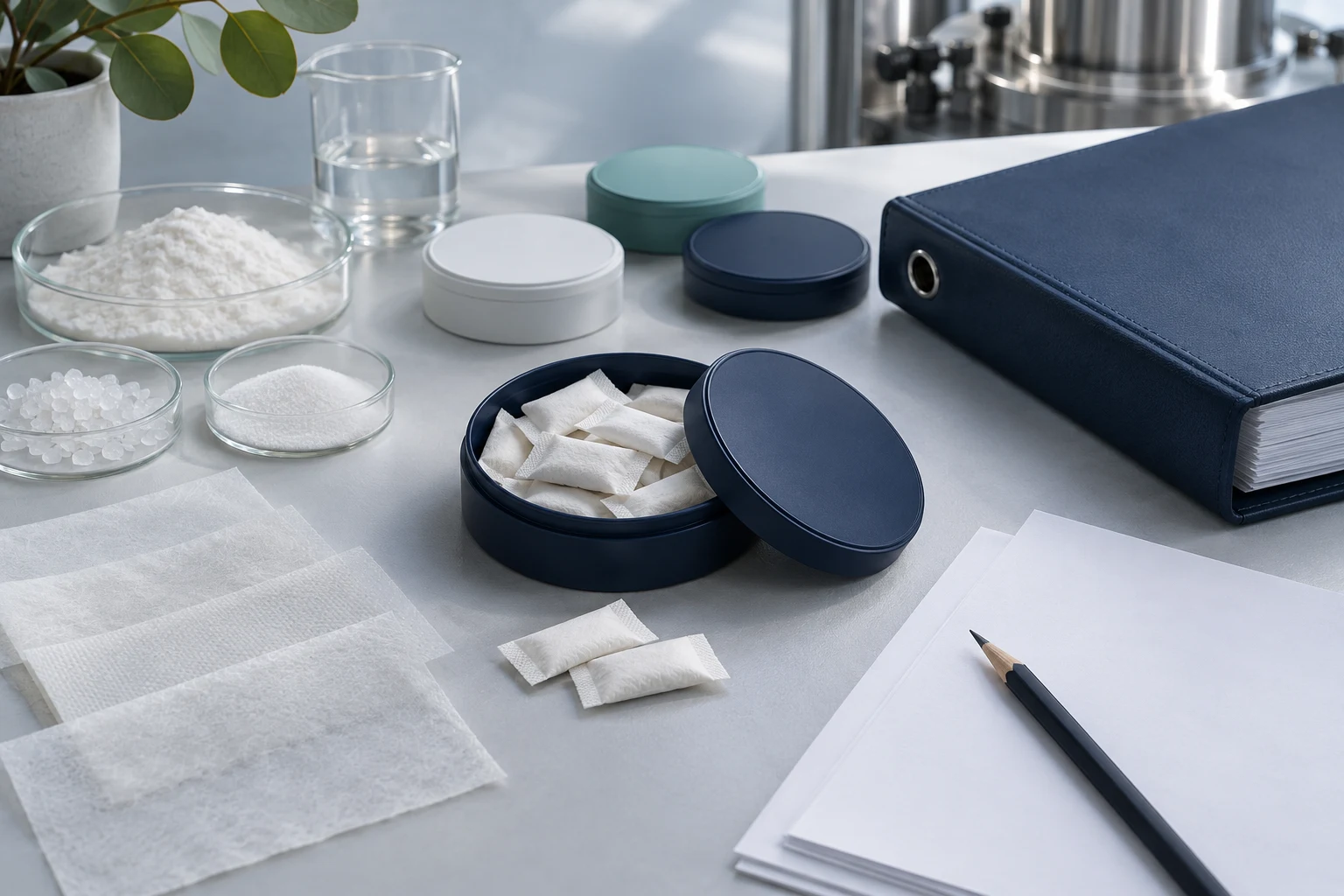
Editorial product illustration.
A supplier’s certificate wall can be a useful starting point. Qualification requires checking the holder, facility, scope, dates and issuer record behind each item. A GMP certificate, FDA facility registration and a business identifier provide different kinds of information.
Read an NSF GMP record by its scope
Match the legal holder and manufacturing address to the facility proposed for your order. Review the standard, listed activities or product categories, certificate identifier and validity information. Check the issuer’s official directory where a relevant listing is available. [1]
During supplier qualification, request current evidence directly from the proposed manufacturer and check its scope against your project. A document copy alone does not confirm current issuer status.
Keep FDA registration separate from approval
FDA states that food-facility registration does not denote FDA approval and that FDA does not issue food-facility registration certificates. [2] A privately produced certificate or portal screenshot should therefore not be presented as product approval.
Ask what category and facility the record concerns and whether registration is required for the proposed activity. Keep internal account details, management codes and personal contact data confidential. Public marketing needs an accurate description, not a screenshot exposing credentials.
Check company and site identities
A company registration or D-U-N-S identifier supports identification. It is not a product quality certificate. Where a trading entity and manufacturing entity differ, document their relationship, contractual responsibilities and the actual production site.
Review any local production licence required for the intended activity. An item on a website should be supported by the relevant record; a general company licence should not be relabeled as a food-production licence.
Move from documents to operating evidence
- Match the proposed product and process to the facility’s scope.
- Review a suitable example of specifications and batch release documentation.
- Assess traceability, supplier controls and change management.
- Discuss complaints, deviations and corrective-action procedures.
- Agree audit access, record confidentiality and requalification triggers.
For a dietary supplement project in the US framework, FDA’s cGMP guidance helps structure questions about quality operations. [3] A certificate can support qualification, but the brand still needs a supplier assessment appropriate to its actual product and market.
Questions buyers ask
Does an FDA registration record approve an oral pouch?
No. Facility registration and product authorization are different matters. Review the actual product category and market requirements.
Does an NSF certificate cover every possible formula?
No. Check its holder, site and scope, then assess whether the proposed product and work are covered and otherwise appropriate.
Is a D-U-N-S number a manufacturing certification?
No. It is a business identifier. It does not establish product quality, regulatory approval or manufacturing scope.
Explore the product specifications
Sources & further reading
- NSF: Registered GMP Facility Listings
- FDA: Food Facility Registration and Private Registration Certificates
- FDA: Dietary Supplement CGMP Small Entity Compliance Guide
Sources checked November 7, 2026. External research and guidance are context; they are not test results or authorizations for a Sunova finished product.
Prepared by Sunova Pouches Editorial for B2B product development. Content is reviewed for sourcing and claim scope; it does not establish finished-product efficacy or market authorization.
Our editorial policy