Development
An oral pouch brief that manufacturers can use
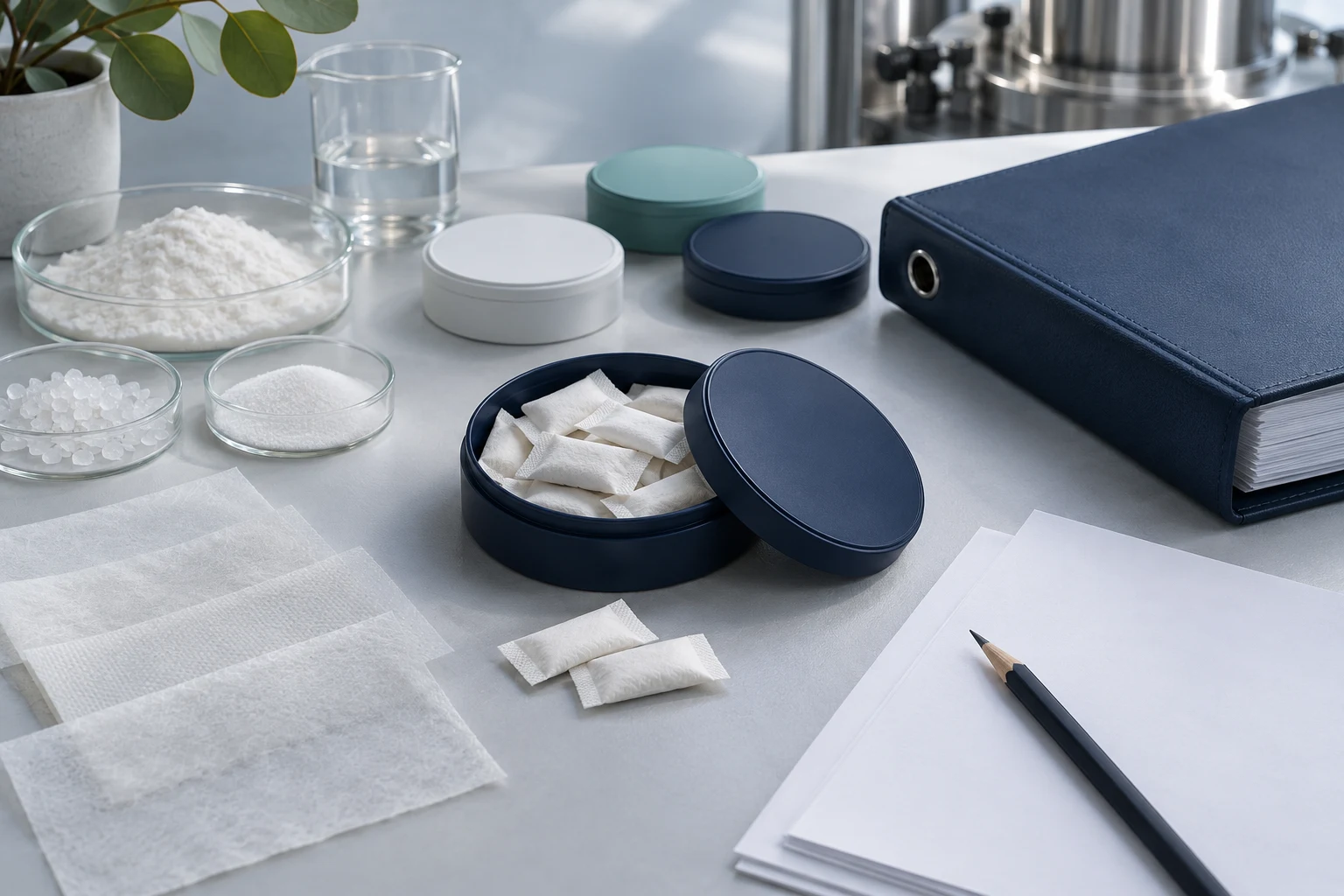
A useful oral pouch brief lets two manufacturers quote the same project. “A premium energy pouch” leaves too many decisions open: the active blend, pouch weight, can, flavor, destination market and evidence needed for release. Writing those decisions down early reduces sample rounds and makes commercial comparisons more meaningful.
Choose the right cooperation model
With OEM, the buyer supplies an agreed specification and the manufacturing work follows that specification. ODM adds collaborative development of the formula or packaging. CDMO links development work with manufacturing transfer and an agreed control strategy. CRO can cover a defined research or method-development assignment. The names are useful starting points, but a written scope determines who owns the formula, the methods, the test results and any changes.
- OEM: provide the formula, packaging artwork, tolerances and release requirements.
- ODM: provide the commercial aim, ingredient preferences and sensory benchmark; agree who owns the developed specification.
- CDMO: define development experiments, scale-up criteria, analytical work and manufacturing handover.
- CRO: define a research question, deliverables and methods. Clinical work requires separate capability and oversight.
Define the product before the packaging
Start with the destination market and the intended route of use. FDA describes dietary supplements as products intended for ingestion. That definition makes it inappropriate to assume a non-swallowed oral pouch has the same classification as a capsule containing the same ingredients. Classification should be reviewed before label claims, consumer directions or a commercial dose are fixed.
Then select a product family: caffeine, energy, functional, nootropic, nutritional, vitamin, oral care, stress relief, mushroom, melatonin, guarana, focus, sleep or coffee. These are development directions. They do not replace a formula specification or establish a finished-product benefit.
The minimum technical brief
- Ingredient identity, form, assay and target amount per pouch.
- Target fill weight, mini/slim/regular format and sealing approach.
- Moisture and pH targets with a defined measurement method.
- Flavor direction, cooling level, sweetness and exclusions.
- Can model, pouch count, label system and transport conditions.
- Release tests, shelf-life objective and destination-market review.
Make sample feedback reproducible
A comment such as “too strong” can mean caffeine, aroma, sweetness, cooling or irritation. Score those attributes separately using a consistent evaluation procedure. Keep the batch reference and sample age with the feedback, since a fresh blend and a stored sample may behave differently.
Compare only a small number of controlled changes at a time. If the base, flavor, moisture and pouch material all change together, the next result will be difficult to explain. A retained reference sample makes later discussions more precise.
Agree the documents that close development
The finished deliverable should include an approved formula, raw-material specifications, a packaging bill of materials, artwork approval, manufacturing instructions, sampling plan, test methods and release criteria. Define how deviations and future changes are authorized. A commercial quotation should state which testing, packaging and development work it includes.
MOQ, price and lead time depend on the agreed project. A component packing quantity such as 1,000 lids per carton is a logistics fact, not a finished-product order minimum.
Questions buyers ask
Can the same project begin as ODM and move to OEM?
Yes, the work can change after the developed specification is approved. Record formula ownership, manufacturing rights and the transfer package.
Does a sample approval establish shelf life?
No. Initial sensory approval and stability evidence answer different questions. Agree a stability protocol for the final formula and package.
What should I send for an initial discussion?
Send the target market, product family, ingredient preferences, desired sensory profile and packaging direction. Include a benchmark only when you have the right to share it.
Reference
FDA: Questions and Answers on Dietary Supplements. The classification discussion is general project-planning information; final market review depends on the actual product.
Prepared by Sunova Pouches Editorial for B2B product development. Content is reviewed for sourcing and claim scope; it does not establish finished-product efficacy or market authorization.
Our editorial policy