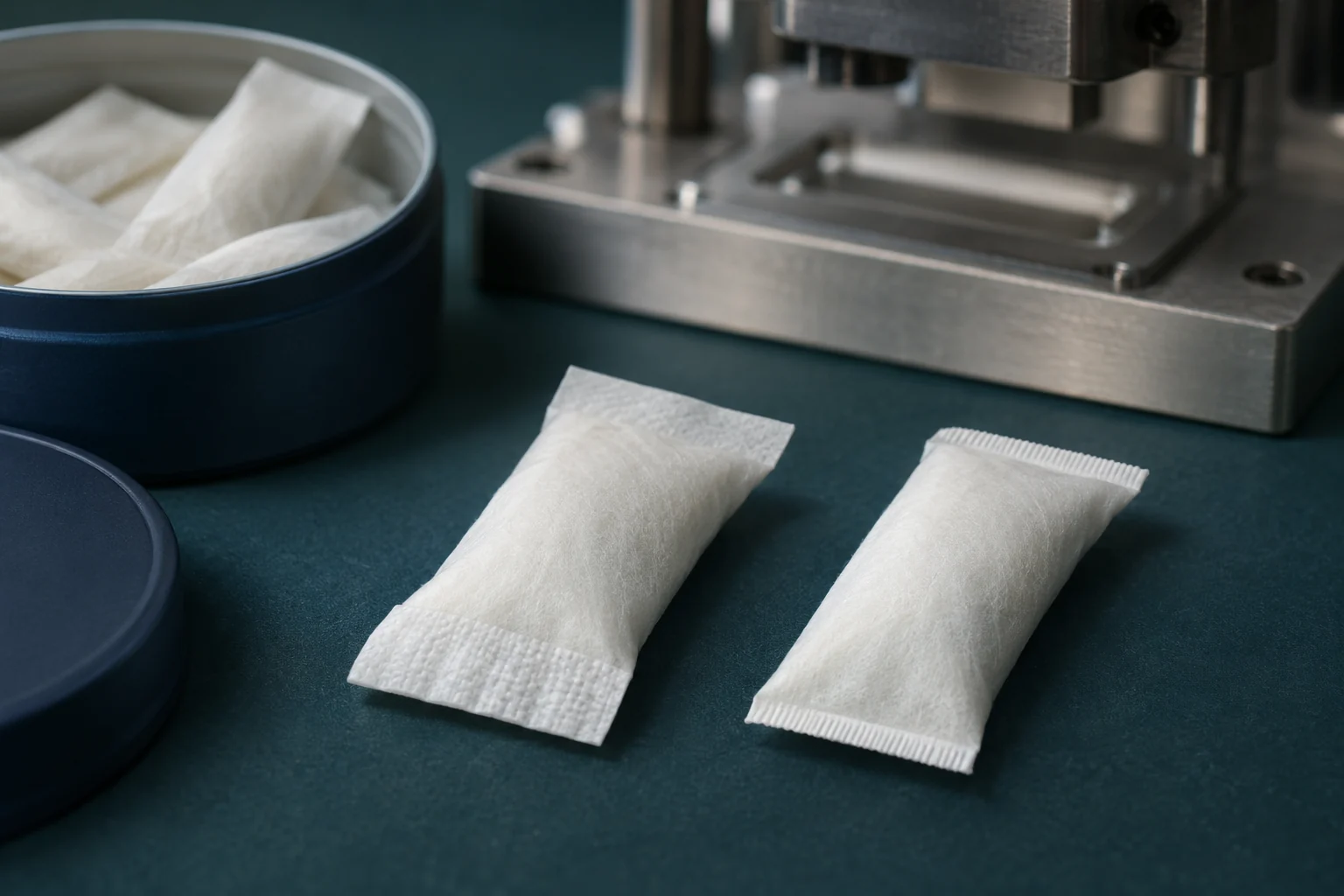
Packaging
Match the pouch to the can

A can diameter tells only part of the packaging story. Two cans of similar width can have different internal height, lid structure, catch compartment and closure force. The right choice starts with a filled pouch sample and a clear intended pouch count.
Use mini, slim and regular as format descriptions
Format names are commercial conventions, not universal dimensions. Major pouch brands offer different mini and slim ranges, and products change between markets and releases. Use a measured drawing for development: length, width, filled thickness, seal allowance and target fill weight.
A compact pouch can feel different after its material absorbs moisture. Sample evaluation should therefore include the intended conditioning and storage state, rather than relying only on the dry empty web.
Compare sealing options with the actual material
Pressed or heat-sealed edges
The web, sealing window and powder behavior must work together. Inspect the seal for continuity, powder contamination, edge stiffness and opening under handling. A wide visible seal can consume useful pouch volume.
Ultrasonic sealing
Ultrasonic development involves material compatibility, tooling, energy settings and a consistent process window. It is an option to evaluate, not a universal upgrade. Compare seal integrity and mouthfeel using the same fill and storage conditions.
Read the 22-model can library as engineering data
The Sunova library preserves the supplier’s model codes and dimensions. It includes low-profile round, flip-top, double-opening, three-opening, tall, single-layer and child-resistant design types. A model described as child-resistant still needs applicable test documentation; a name or triangular mark does not prove compliance.
- Check usable internal volume and the closure’s intrusion into that volume.
- Test the proposed pouch count without excessive compression.
- Check label area, rim clearance and the artwork distortion around curves.
- Evaluate opening, reclosing and lid retention after transport simulation.
- Confirm whether a separate used-pouch compartment is part of the model.
Separate component logistics from finished packaging
A can supplier may ship lids and containers in separate cartons. Carton quantities, gross weight and packing dimensions help purchasing and freight planning, but they are not the finished-product MOQ. Ask which components are included, whether labels are applied and how the filled cans are packed.
Use approved physical samples and drawings to close the specification. Published dimensions are references, and tooling tolerance or a later revision can affect fit.
Build the package test around the formula
A moisture-sensitive active blend and a strongly aromatic flavor place different demands on the same can. Check the complete system: pouch web, lid fit, label or barrier components, storage temperature and shipping conditions. A can that closes well on day one is not evidence of shelf-life performance.
Record the selected model, drawing revision, material declaration, closure checks and final pack configuration in the packaging bill of materials. Changes in any of those elements should be assessed before use.
Questions buyers ask
Can we request a different color?
Color customization can be discussed by model. Confirm resin, color reference, quantity and sample approval.
Does a taller can always hold more pouches?
Not necessarily. Lid construction and internal compartments can reduce usable space.
Can a familiar market format be copied exactly?
Use the desired size and handling characteristics as a brief. Develop original artwork and confirm rights and tooling requirements.
Reference
VELO: Mini format reference. Brand references concern format conventions only; Sunova is independent and does not imply an affiliation.
Prepared by Sunova Pouches Editorial for B2B product development. Content is reviewed for sourcing and claim scope; it does not establish finished-product efficacy or market authorization.
Our editorial policy